
Medical Castings |
Biocompatible Alloy & Precision Components
Precision medical castings in biocompatible alloys delivered in weeks — not months — with zero tooling investment required.
Rapid Precision Castings produces high-performance medical device components using our patented LAMP™ ceramic 3D printing technology — delivering first parts in 2–4 weeks at reduced cost, with no dies, patterns, or tooling required for prototyping or production.
Benefits of Rapid Precision Castings for the Production of Medical Components
Zero Tooling Investment Required
Traditional medical castings require $25,000–$100,000+ in dies and tooling before a single part is made, plus 16–20 weeks of lead time. Our LAMP™ technology eliminates that barrier:
10x Faster Development Timelines
Legacy investment casting processes take 52–80 weeks for tooling design and qualification. Digital Foundry™ delivers parts in as little as 2–4 weeks:
Production-Equivalent Material Properties
Few domestic foundries can deliver medical castings in biocompatible alloys that meet specific requirements for medical applications:
Industry Applications
Biocompatible Alloy Casting
We produce medical investment castings in FDA-recognized biocompatible materials with the precision required for medical applications:
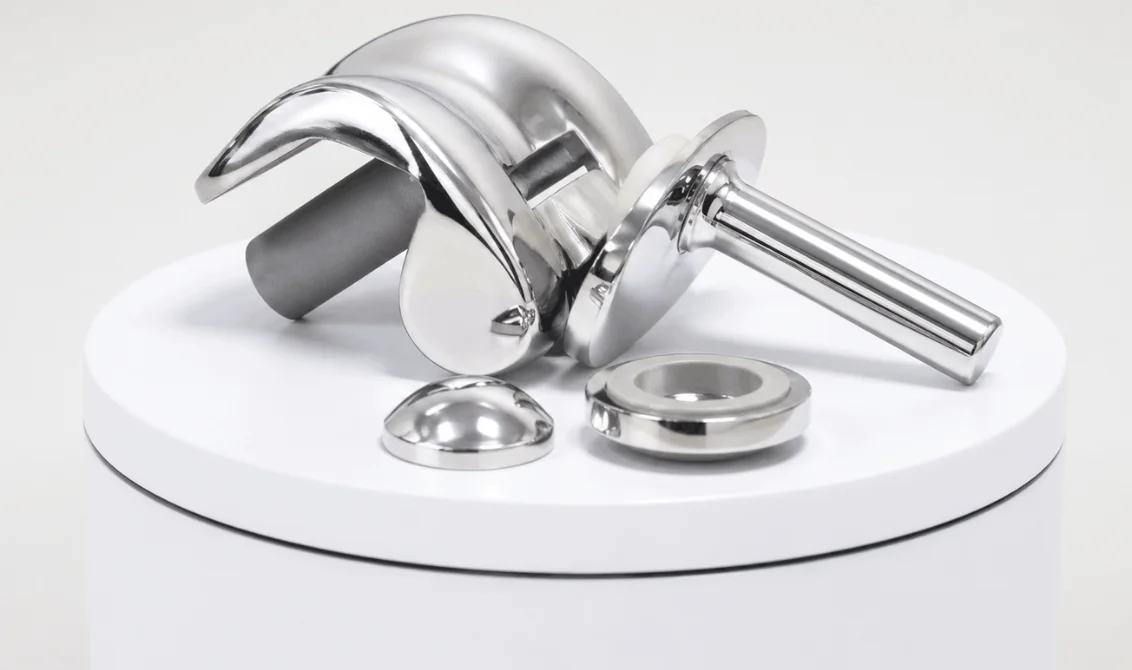
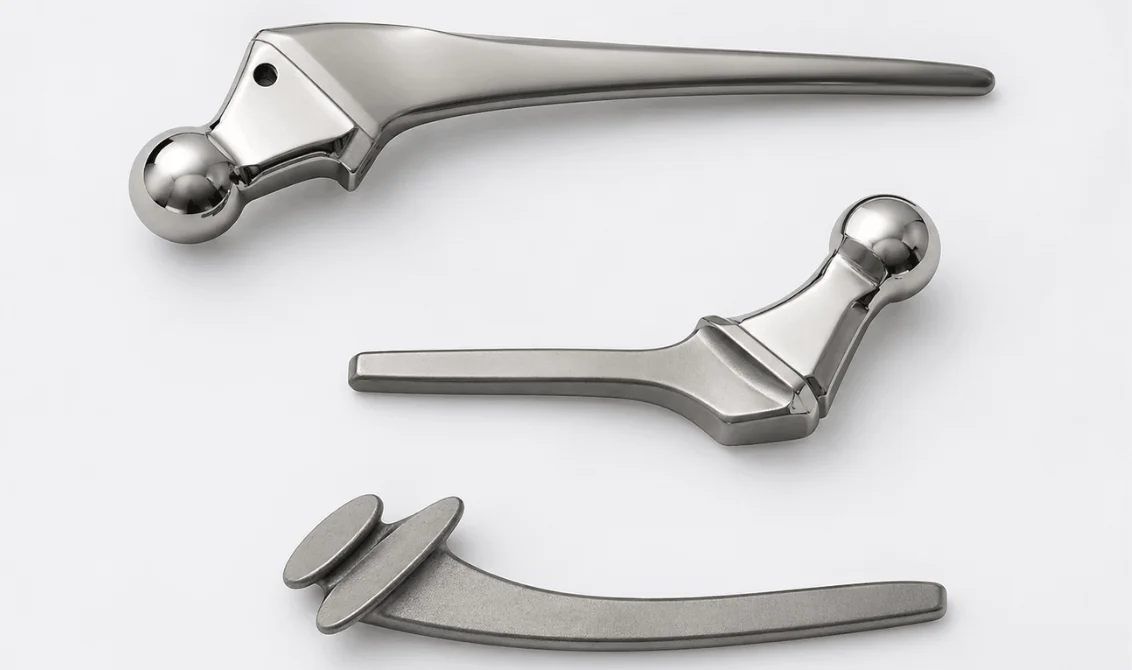
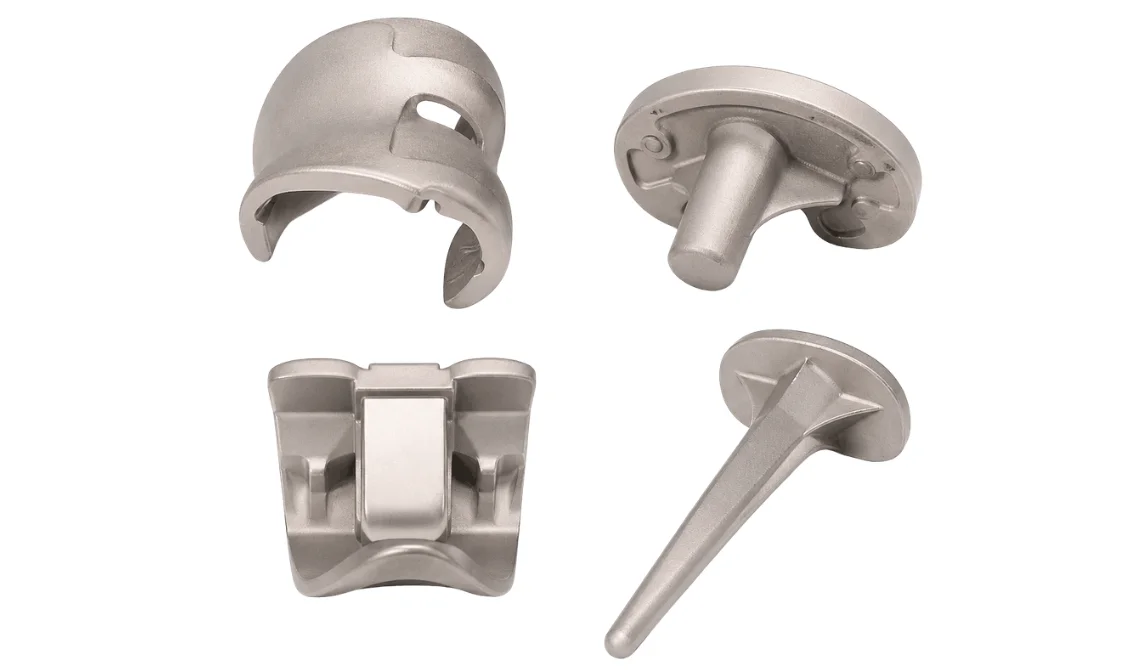
- ASTM F75 castings for hip, knee, and orthopedic implants with tight tolerances.
- Stainless steel 316L components for surgical instruments and hospital equipment requiring durability and surface finish.
- Full material certifications, traceability, and ISO compliance supporting regulatory submissions.
- Critical applications in ambulatory surgery centers, hospitals, and other care settings.
Complex Medical Components
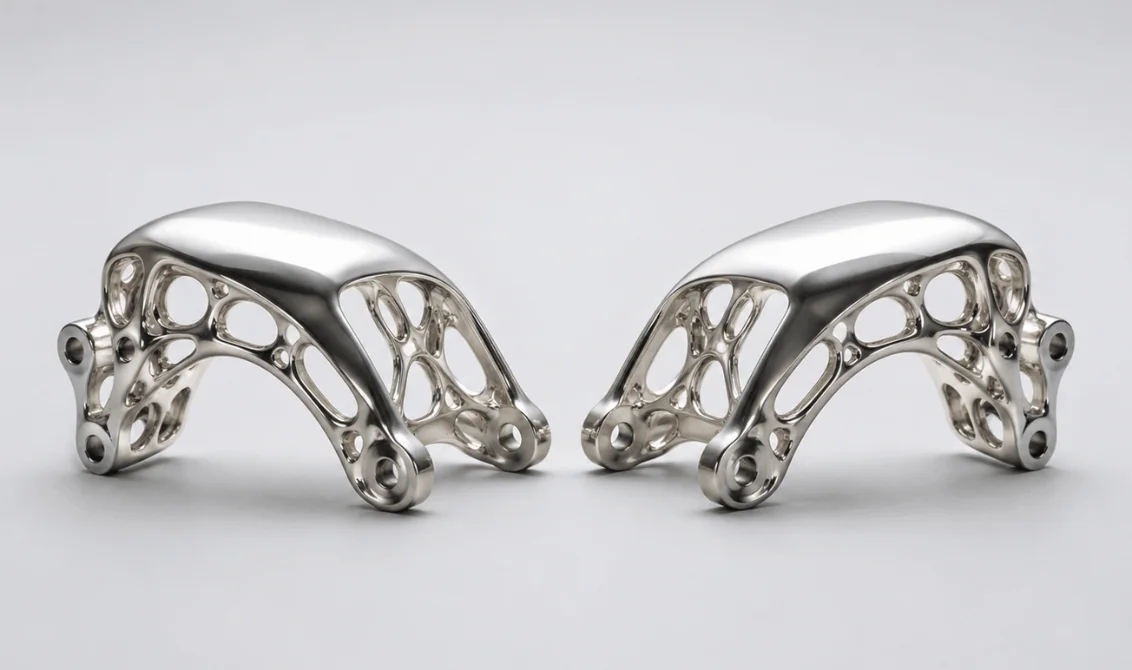
Traditional investment casting cannot produce the complex geometries modern medical devices demand. Our LAMP™ process integrates all internal features into a single printed ceramic shell:
- Surgical instruments with intricate internal channels, cast in a single operation.
- Implantable devices with complex surface textures engineered for osseointegration.
- Feature resolution of tens to hundreds of microns, surface finishes below 4 microns RMS.
- Supports small, unique, and complex designs to enhance medical device functionality.
Medical Castings Applications Gallery
Our Medical Casting Process

Medical Device CAD Analysis and Optimization
Every medical casting begins with a fully optimized digital model — whether from your CAD file, 2D drawings, physical samples, or 3D scans. Our engineering team integrates all features into a single printable ceramic shell structure:

LAMP™ Medical-Grade Ceramic Shell Printing
Our proprietary Large Area Maskless Photopolymerization process prints ceramic investment casting shells directly from your digital file — no wax patterns, no core assembly, no traditional shell building. The result is a monolithic ceramic shell with all internal features integrated:

Biocompatible Alloy Casting and Quality Validation
Printed ceramic shells are thermally processed and sintered to over 99.5% density before casting. We produce a broad range of medical alloys for critical applications:
Why Choose Rapid Precision Castings for Medical Applications?
Proven Medical Device Credentials
Our facility is fully credentialed for medical device applications, with validated experience across orthopedic, surgical, and implantable device programs:
Technology Leadership in Medical Casting
Our LAMP™ ceramic 3D printing innovation is backed by over a decade of government-funded validation. No other domestic foundry offers comparable medical casting capabilities:
Complete Domestic Medical Supply Chain
All medical castings are produced domestically, guaranteeing compliance and rapid support for medical device projects:
Our Medical Device Manufacturing Services
Our medical castings manufacturing services support medical device companies throughout the United States from our advanced Digital Foundry™ facility in Atlanta, Georgia:
Southeast Medical Corridor: Georgia, Florida, Alabama, Tennessee, South Carolina, North Carolina
Medical Device Hubs: California, Massachusetts, Minnesota, Pennsylvania, Texas, New York
Research Centers: North Carolina Research Triangle, Boston/Cambridge, San Diego, Denver
Manufacturing Regions: Ohio, Michigan, Illinois, Indiana, Wisconsin, Connecticut
We serve medical device manufacturers nationwide with domestic manufacturing supporting regulatory compliance requirements.
Contact Rapid Precision Castings Today
Ready to eliminate tooling costs and accelerate medical device development with the most advanced biocompatible casting technology in the United States?
Contact our medical casting specialists today:
Transform your medical device development timeline with tooling-free precision casting.
Frequently Asked Questions About Medical Castings
The four main types of metal casting are sand casting (using sand molds), die casting (using reusable metal molds under pressure), investment casting (using ceramic shells built around wax patterns), and centrifugal casting (using rotational force). Investment casting delivers the highest precision and surface quality, making it the standard for medical device components.
In the medical context, orthopedic surgeons and emergency physicians apply plaster or fiberglass casts for bone fractures. In the manufacturing context, 'medical castings' refers to precision metal components produced through investment casting for use in orthopedic implants, surgical instruments, and medical devices.
Rapid Precision Castings produces medical-grade investment castings from its Atlanta, GA facility. RPC casts biocompatible alloys including Cobalt Chromium Moly (ASTM F75), Stainless Steel 316L, and 17-4 PH for orthopedic implants, surgical instruments, and precision medical device components.
RPC casts Cobalt Chromium Moly (ASTM F75 equivalent) for knee and hip implants and orthopedic devices, Stainless Steel 316L for surgical instruments and orthopedic hardware, and 17-4 PH stainless steel for structural medical components. All medical alloys are produced to applicable ASTM standards.
Medical device development requires prototypes in the production alloy for meaningful mechanical testing and design validation, but traditional casting takes 52–80 weeks for tooling. DirectPour™ delivers functional prototypes in the final alloy within days — enabling faster design validation, earlier testing, and more efficient iteration cycles throughout the regulatory pathway.
Prototyping with CNC machining or metal 3D printing produces parts with different microstructure, mechanical properties, and surface characteristics than investment casting. Testing a machined prototype doesn't fully validate a cast production design. DirectPour™ solves this by making the production process itself fast enough for prototyping.
LAMP™ technology achieves surface finishes below 4 microns RMS with feature resolution of tens to hundreds of microns. This precision is critical for medical applications where surface texture affects osseointegration (implant-to-bone bonding), fluid flow in surgical instruments, and overall device function.
Yes. RPC has demonstrated knee implant prototyping using the DirectPour™ process in Cobalt Chromium Moly (ASTM F75 equivalent) in partnership with Signicast. The process produces prototypes with production-equivalent material properties, enabling meaningful mechanical testing and design validation before committing to production tooling.
In traditional casting, each design change requires new tooling at a cost of weeks and tens of thousands of dollars. With DirectPour™, design changes require only a CAD file update — the next iteration can be cast immediately at no additional tooling cost. This enables medical device companies to optimize designs through multiple iterations without the financial penalty of retooling.
Medical device castings are produced to ASTM standards with full material certification and traceability. Non-destructive testing options include radiography, fluorescent penetrant inspection, and precision dimensional verification. RPC works with medical device manufacturers to meet their specific regulatory and quality system requirements.