
Electric Vehicle Components |
EV Powertrain & Structural Castings
Precision EV castings delivered in days — not months — with zero tooling investment.
We produce electric vehicle components for battery electric vehicles (BEVs), hybrid electric vehicles (HEVs), fuel cell electric vehicles, and electric drive vehicles using our patented LAMP™ ceramic 3D printing technology — delivering first parts in as little as 10 days at 50% lower cost, with no dies, patterns, or tooling required. Our process creates critical electric traction motor housings, battery packs, motor controllers, power electronics, and auxiliary systems optimized for converting electrical energy into mechanical energy and supporting safe, efficient operation.
Benefits of Electric Vehicle Component Manufacturing
Zero Tooling Investment for EV Component Development
Traditional EV component manufacturing demands $100,000+ in upfront tooling before a single part is made. LAMP™ eliminates that barrier:
90% Energy Reduction in EV Component Production
Our ARPA-E-validated process reduces energy consumption by up to 90% versus traditional investment casting — eliminating seven of twelve energy-intensive process steps:
Complex Integrated Geometries for Advanced EV Systems
Conventional tooling cannot produce the internal geometries modern EV powertrain components demand. Our LAMP™ process integrates all internal features into a single printed ceramic shell:
Industry Applications
EV Powertrain Components
The basic EV powertrain — typically composed of the battery pack, electric traction motor, power electronics controller, and thermal management systems — contains relatively few components compared to internal combustion engine vehicles. Each of those components, however, demands exceptional precision, a proper operating temperature range, and energy efficiency. Our LAMP™ technology produces critical electric traction motor housings, motor controller enclosures, battery management system housings, inverter cooling systems, auxiliary batteries, and onboard chargers — all in a single casting operation that traditional investment casting cannot match.
Lightweight Structural Castings
Lightweighting is the single most important strategy for extending an electric vehicle’s range — every gram saved in the vehicle’s chassis, closures, and body-in-white allows for a smaller traction battery or longer driving range. Our ceramic 3D printing process enables topology-optimized structural castings with integrated features, eliminating the weight penalties of welded assemblies and multi-piece fabrications. From suspension components to battery enclosure structures, we produce EV structural castings, essential components, and vehicle accessories that support next-generation electric cars and fully electric vehicles while maintaining efficient operation.
EV Applications Gallery
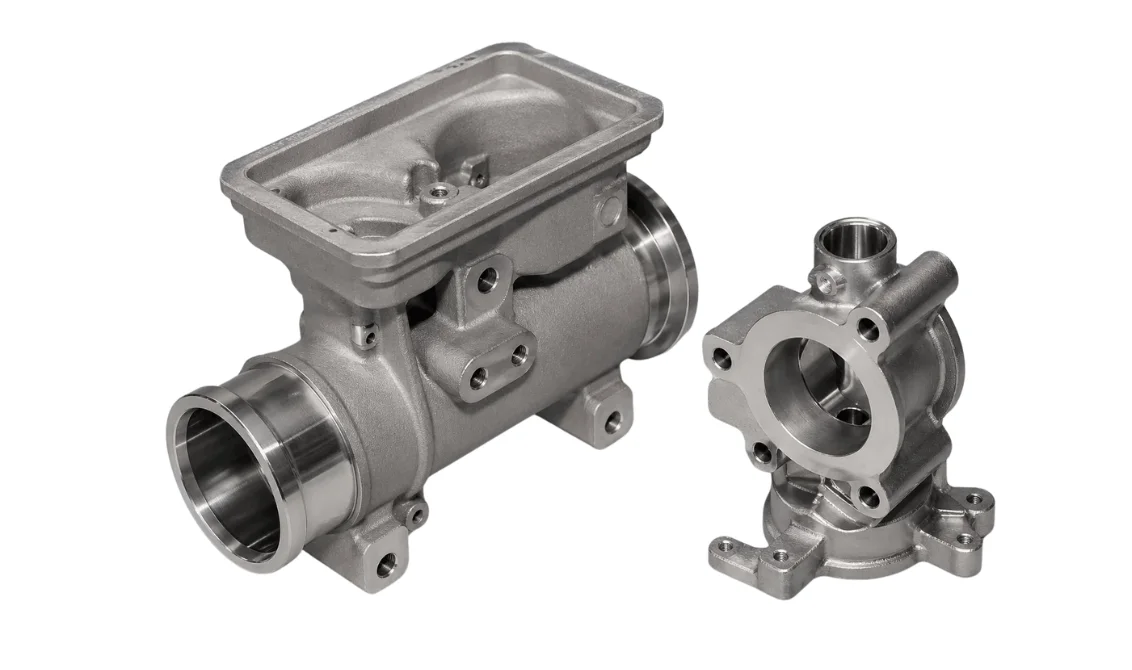
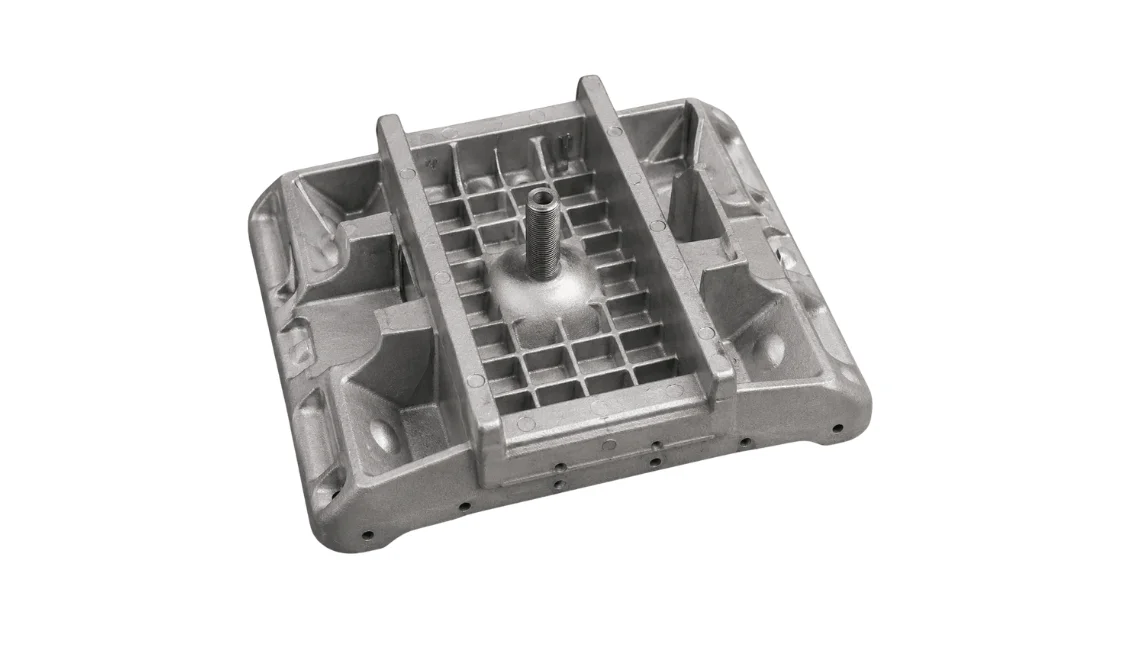
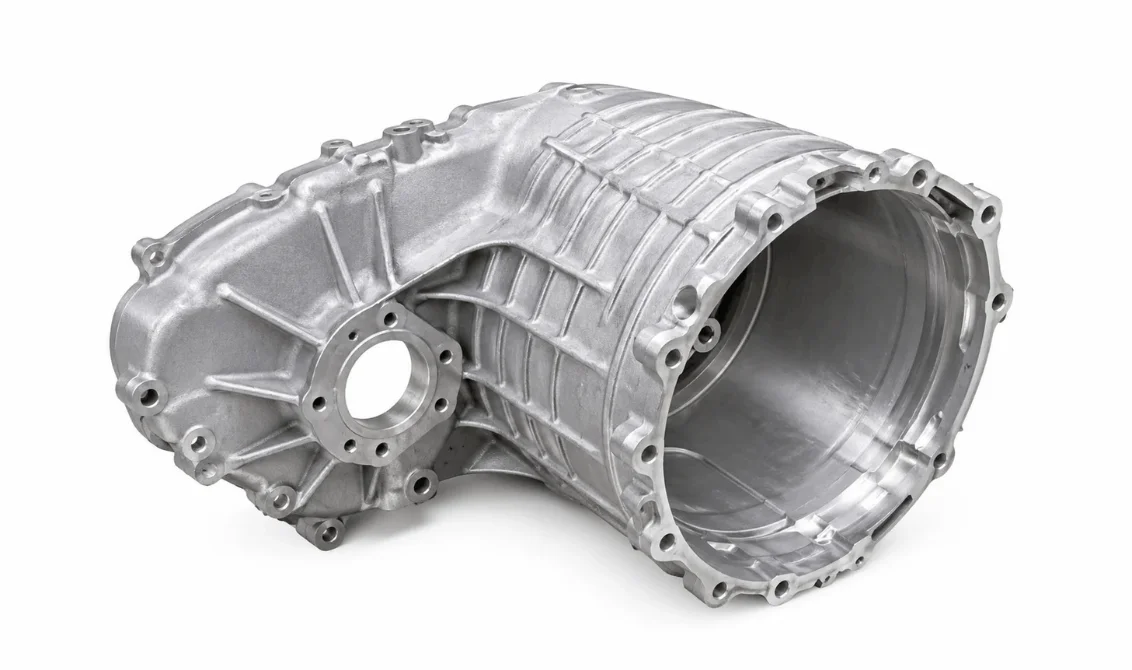
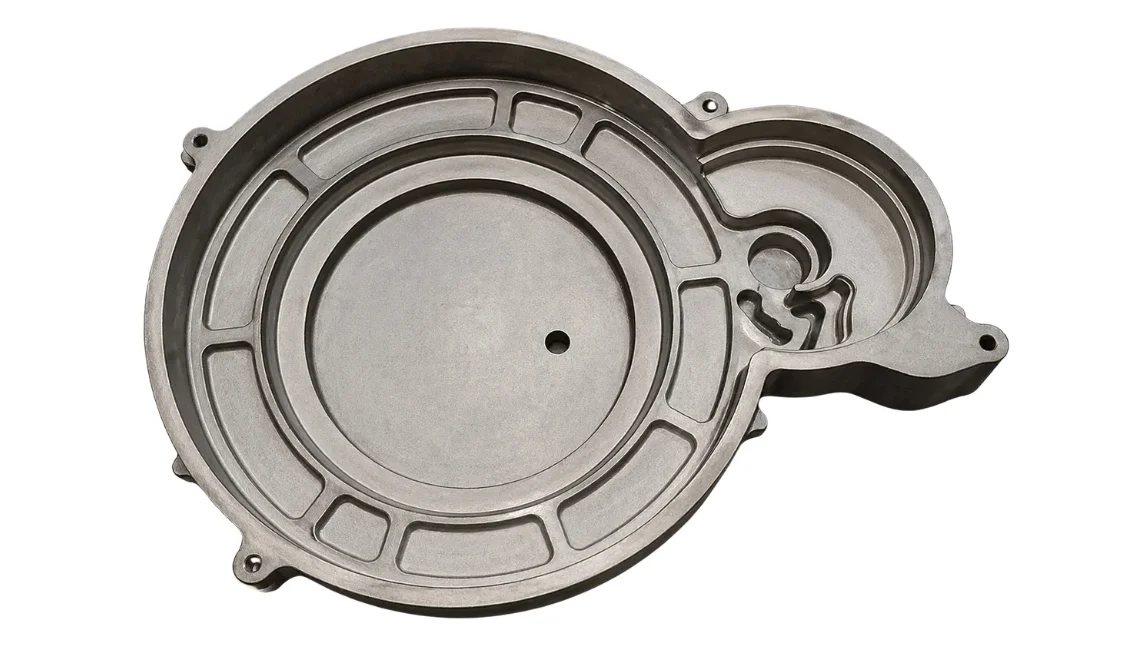
Our Electric Vehicle Components Manufacturing Process

Digital Model Optimization for EV Applications
Every EV component begins with a comprehensive digital analysis optimizing thermal systems, weight, energy efficiency, and battery pack performance. Our engineering team integrates cooling channels, mounting features, mechanical system components, and structural elements into a single printable ceramic shell — eliminating multi-piece tooling chains that delay EV development programs by months.

LAMP™ Ceramic Shell 3D Printing for EV Components
Our proprietary Large Area Maskless Photopolymerization (LAMP™) technology prints ceramic investment casting shells directly from digital files — no wax patterns, no core assembly, no traditional shell-building delays. 3D printing enables the production of complex shapes that replace larger assemblies like heat exchangers, battery housings, and motor enclosures, improving performance while reducing mechanical system complexity. Build volumes up to 24″ × 24″ × 24″ to accommodate production-scale EV components with surface finishes under 4 microns RMS and ±2-micron positioning accuracy.

Precision Casting and Quality Assurance
Printed ceramic shells are thermally processed and sintered to over 99.5% density before pouring aluminum alloys, stainless steels, and specialized materials optimized for battery electric vehicles, hybrid electric vehicles, and electric drive vehicles. Complete dimensional inspection, nondestructive testing, and verification of thermal system performance guarantee safe, efficient, and reliable operation before delivery to EV assembly lines. Electrical power, AC electricity, DC electricity, and voltage distribution are verified for proper functioning with auxiliary systems and power vehicle accessories.
Why Choose Rapid Precision Castings for Electric Vehicle Components?
Proven EV Industry Innovation
Our LAMP™ technology represents over $11 million in validated government-funded research through DARPA, ARPA-E, and America Makes programs, with 26+ patents protecting our ceramic 3D printing innovations across six countries. Makers of electric vehicles, hybrid electric vehicles, and fully electric vehicles can now break free from conventional stamping, casting, and injection molding processes — enabling capabilities only additive manufacturing can deliver.
Complete Domestic EV Supply Chain
Ten states account for 84% of announced EV manufacturing investments — Georgia alone has over $26 billion supporting 31,600 jobs. Our Atlanta-based company provides Build America, Buy America Act compliance while delivering EV powertrain components, battery packs, traction batteries, chargers, and vehicle accessories with full supply chain transparency.
Sustainable Manufacturing Leadership
Our ARPA-E-validated 90% energy reduction supports EV manufacturer sustainability targets and ESG reporting — eliminating wax processing, multi-cycle shell building, and tooling manufacture. Combined with 90% scrap reduction and elimination of hazardous process chemicals, our process delivers the cleanest EV component manufacturing solution for battery electric vehicles, hybrid electric vehicles, and electric drive vehicles.
United States Electric Vehicle Component Manufacturing Services
We serve EV manufacturers, suppliers, and development programs nationwide from our advanced Digital Foundry™ facility in Atlanta, Georgia:
Southeast EV Hub: Georgia, Tennessee, Alabama, Florida, South Carolina
Traditional Auto Centers: Michigan, Ohio, Indiana, Illinois
Emerging EV Markets: Texas, California, Nevada, Arizona
Technology Centers: Massachusetts, Connecticut, New York, Colorado
Complete National Coverage: Supporting EV component requirements across all 50 states
Contact Rapid Precision Castings for Electric Vehicle Components Today
Ready to eliminate tooling costs, achieve complex EV component geometries, and support your sustainability targets with the most advanced casting technology available? Contact Rapid Precision Castings today.
Frequently Asked Questions About Electric Vehicle Components
The seven main parts of an electric motor include the stator, rotor, windings, bearings, housing/enclosure, end caps, and cooling system components. In electric vehicle applications, the motor housing and structural components surrounding the powertrain are frequently produced using precision investment casting.
The battery pack is typically the most expensive component of an electric vehicle, often representing 30–40% of the total vehicle cost. However, the electric motor and powertrain components — including precision-cast housings, structural mounts, and thermal management hardware — represent significant manufacturing costs as well.
Rapid Precision Castings produces electric vehicle components from its Atlanta, GA facility. RPC's DirectPour™ process is especially suited to the EV industry's need for rapid prototyping of lightweight aluminum castings, complex thermal management hardware, and short-run production of powertrain components.
RPC produces motor housings, inverter enclosures, battery tray structural components, thermal management manifolds, cooling channel hardware, gearbox housings, and structural powertrain mounts. These components are typically cast in lightweight aluminum alloys (A356, A357) optimized for the weight-critical EV application.
EV development cycles are accelerating as automakers race to market. DirectPour™ delivers functional prototype castings in the production alloy within 10 days — without tooling investment. This enables EV startups and established manufacturers to test and iterate powertrain and structural designs at the pace their development timelines demand.
EV thermal management systems require complex internal cooling channels, thin walls, and precise geometries to manage battery and motor temperatures. Investment casting — particularly with LAMP™ 3D-printed molds — produces these features in a single operation, eliminating multi-part assemblies and the leak paths associated with welded or bonded joints.
RPC casts aluminum A356 and A357 for EV applications. A357 offers higher strength due to its elevated magnesium content, making it preferred for structural powertrain components. Both alloys provide excellent castability, good strength-to-weight ratios, and corrosion resistance critical for automotive applications.
Yes. LAMP™ technology enables casting of topology-optimized, organic, and lattice-like structures that minimize weight while maximizing structural performance. These geometries — generated by computational design algorithms — cannot be produced with traditional casting tooling but are well-suited to 3D-printed ceramic molds.
Electric vertical takeoff and landing (eVTOL) vehicles demand lightweight, high-precision castings with rapid iteration cycles. RPC's DirectPour™ process delivers aluminum castings with complex internal geometries for thermal management, structural optimization for weight reduction, and rapid turnaround that matches the pace of eVTOL development programs.
There is no minimum order quantity. RPC produces single-unit prototypes at the same per-part cost as production volumes because there is no tooling investment to amortize. This makes DirectPour™ ideal for EV startups and R&D teams that need functional castings for testing without committing to high-volume production.