
Industrial Metal Castings |
Heavy Equipment & Machinery Components
Precision industrial metal castings delivered in days — not months — with zero tooling investment.
Rapid Precision Castings produces high-performance components for heavy equipment, industrial machinery, and manufacturing systems using our patented LAMP™ ceramic 3D printing technology. First parts arrive in as little as 10 days at reduced cost, with no dies, patterns, or tooling required for your industrial metal casting needs. Our investment casting process creates parts in aluminum, stainless steel, nickel alloys, and other ferrous and non-ferrous metals — supporting demanding applications in construction, mining, automotive, power generation, and defense industries.
Benefits of Rapid Precision Castings for the Production of Industrial Metal Castings
Zero Tooling Investment Required
Traditional industrial metal casting requires $25,000–$100,000+ in dies and tooling before a single part is produced. Our LAMP™ technology eliminates that barrier entirely:
10x Faster Production Lead Times
Legacy casting processes demand 12–24 weeks for tooling design and fabrication — downtime industrial operations cannot afford. Digital Foundry™ delivers parts in as little as 10 days:
Superior Material and Alloy Capabilities
Our LAMP™ process handles demanding alloys, complex designs, and precision requirements that traditional foundries cannot match:
Industry Applications
Heavy Equipment Components
Critical castings for construction, mining, and agricultural machinery are produced without tooling delays or minimum order constraints:
- Hydraulic pump housings and valve bodies for construction and mining equipment.
- Transmission cases and gearbox housings for agricultural and earthmoving machinery.
- Structural brackets and load-bearing frames with integrated mounting features.
- Wear-resistant components in stainless steels, nickel alloys, and ferrous alloys for high-impact environments.
Industrial Machinery Parts
We produce precision investment casting components for manufacturing equipment, processing systems, and automation machinery:
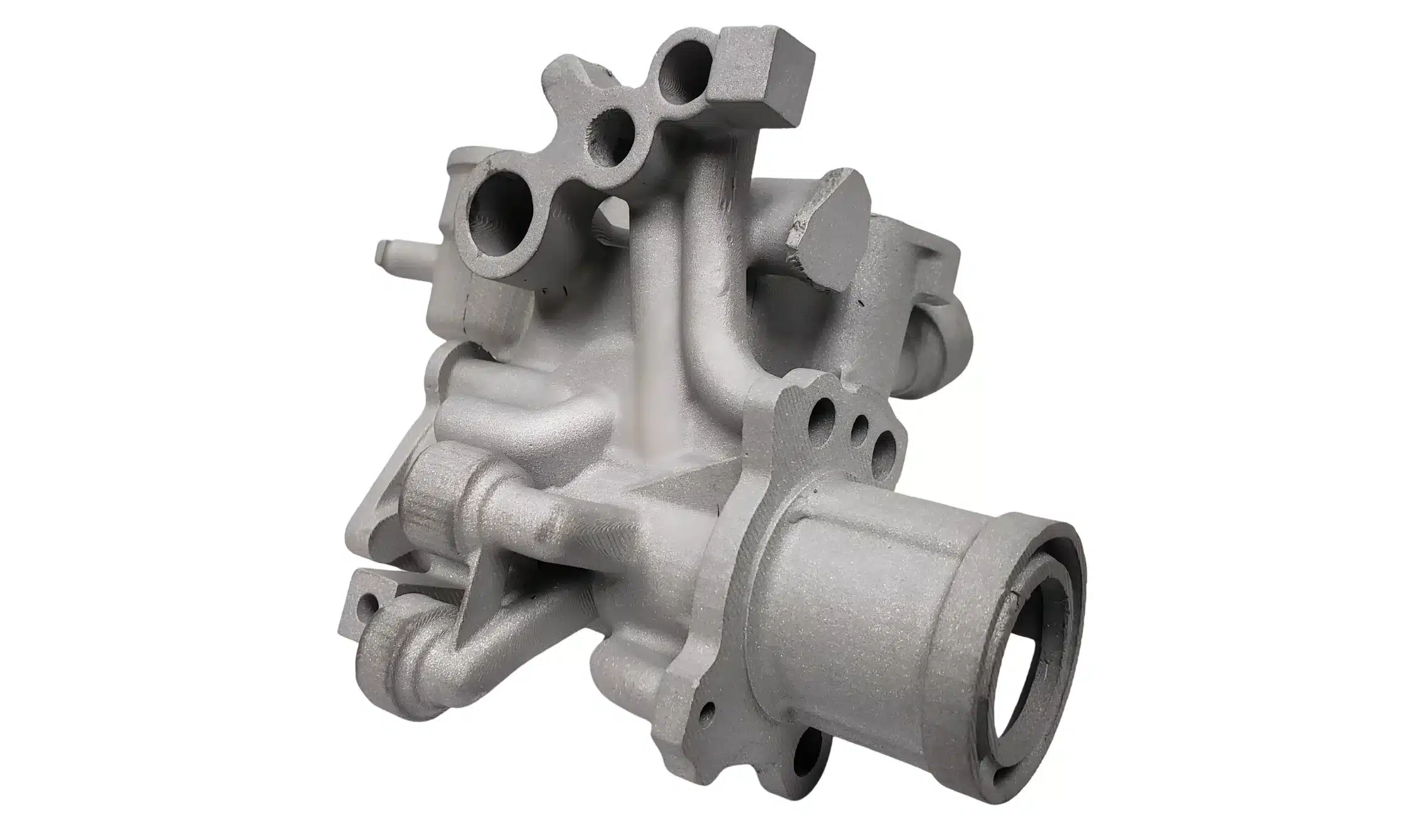
- Complex pump manifolds and flow-control housings cast in a single operation.
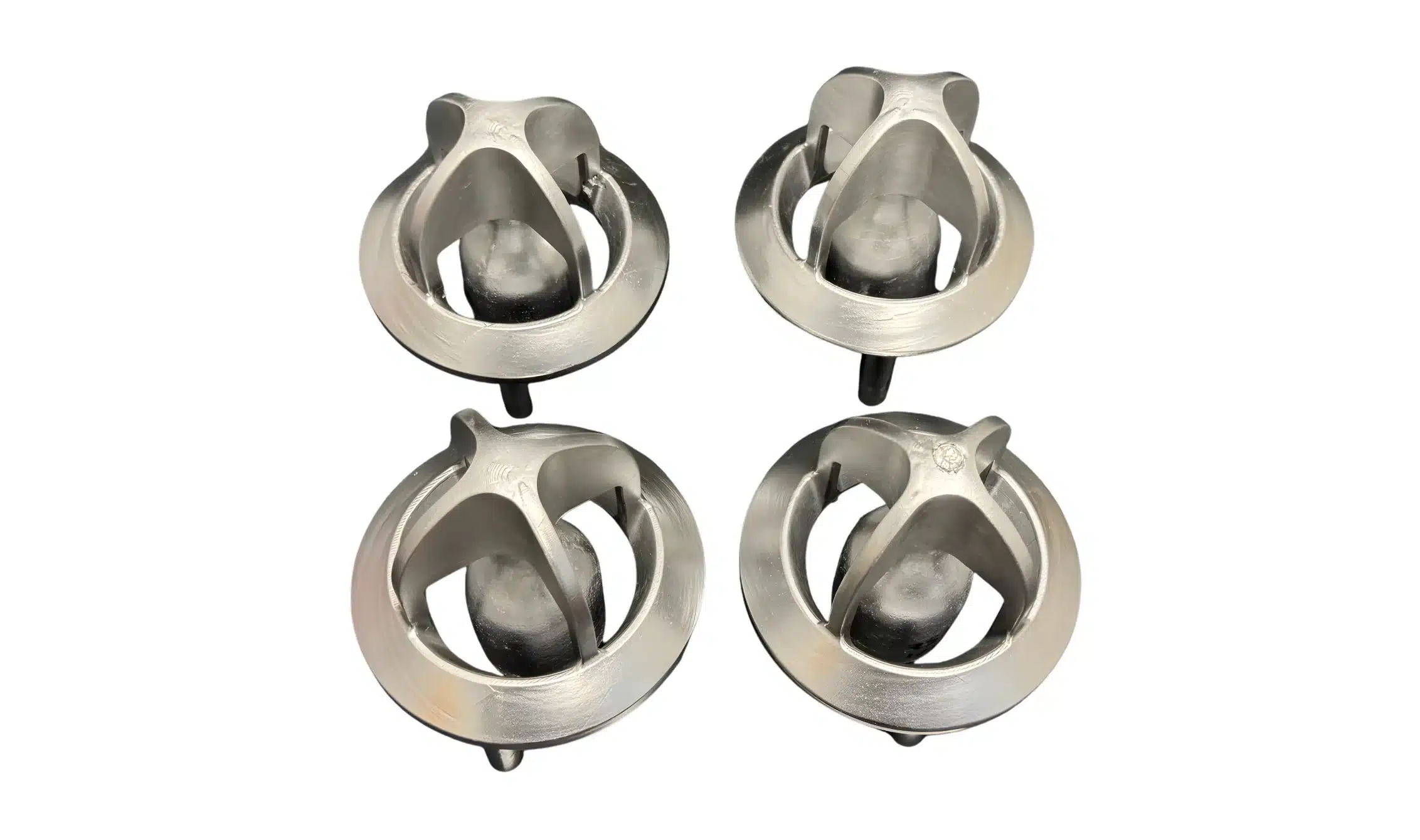
- Impellers and turbine components with internal geometries, impossible using conventional lost wax casting.
- Precision mounting surfaces and structural frames for automation, robotics, and industrial equipment.
- Replacement parts when the original tooling no longer exists.
No other domestic investment casting company delivers this combination of speed, geometric complexity, and precision for industrial machinery applications.
Complex Geometries
Traditional casting cannot produce the internal geometries that modern industrial machinery and heavy equipment demand. LAMP™ integrates all internal features into a single printed ceramic shell:
- Closed impellers with curvilinear channels, eliminating up to 12 sets of conventional tooling.
- Pump manifolds and flow housings with complex internal passages cast in one operation.
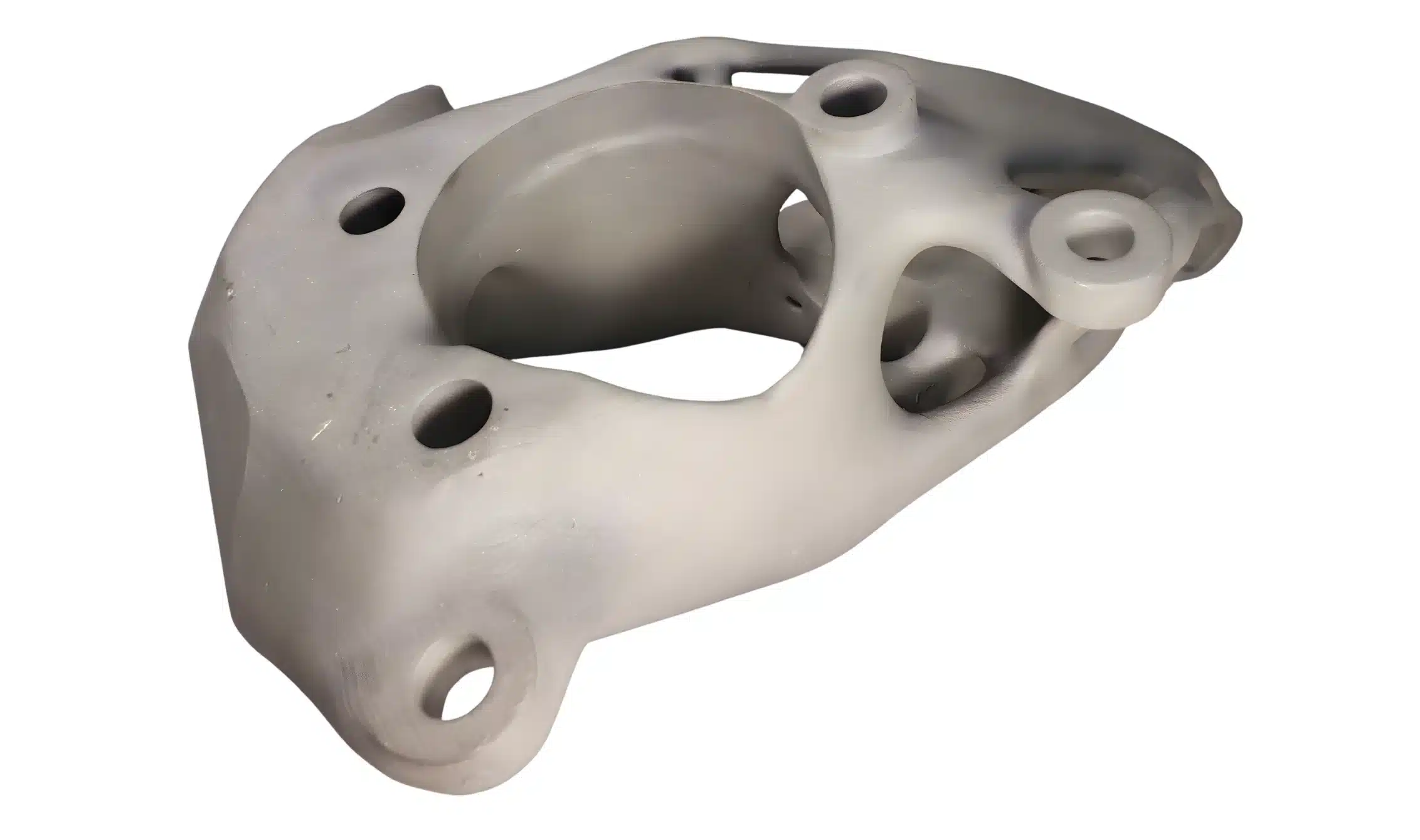
- Structural components with lattice structures and topology-optimized geometry, impossible via traditional methods.
- Feature resolution of tens to hundreds of microns with ±2-micron XYZ positioning accuracy.
Additive manufacturing is increasingly used to create ceramic molds, shortening development timelines. Our DirectPour™ process eliminates tooling, producing precision investment parts faster and more cost-effectively.
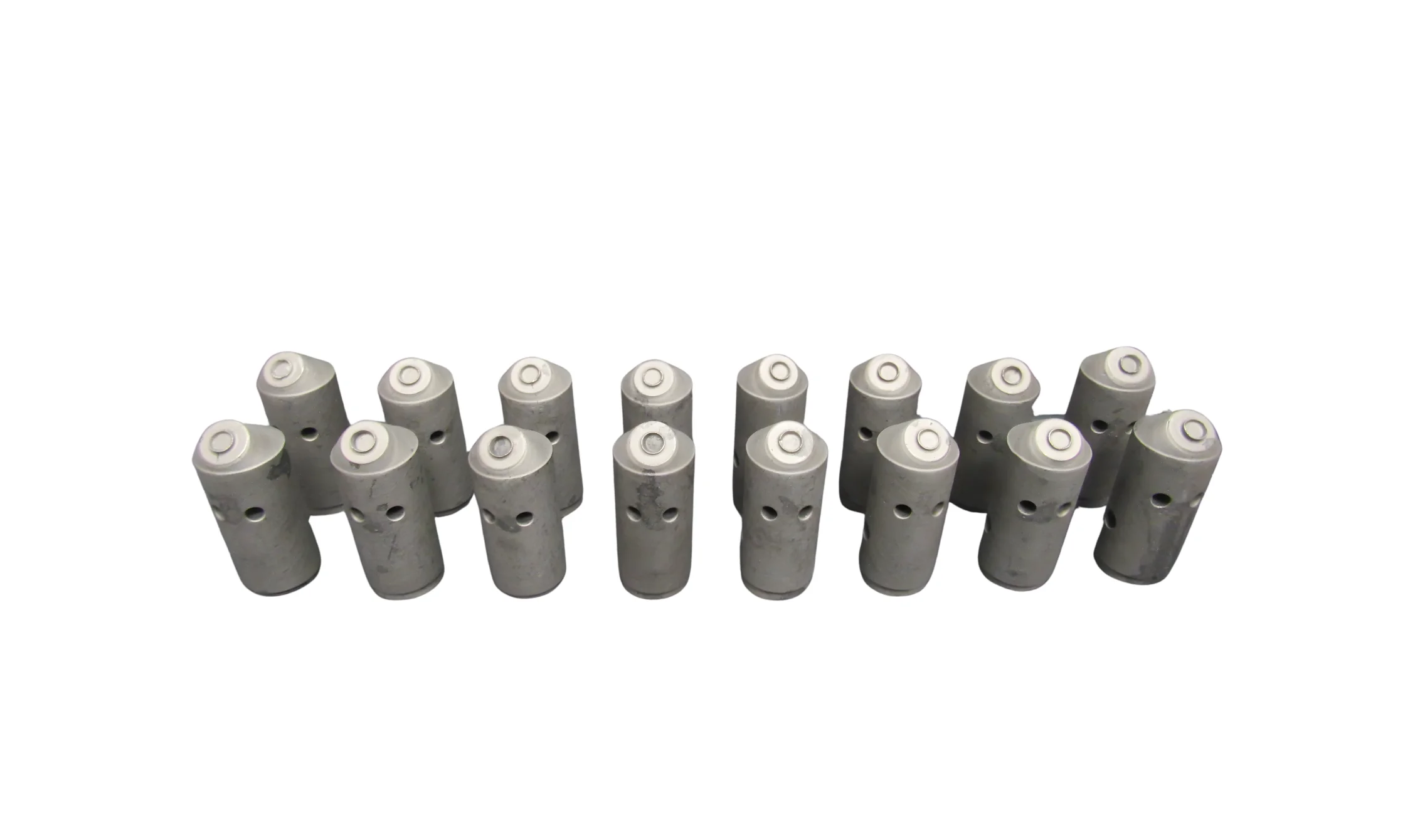
Industrial Metal Castings Application Gallery
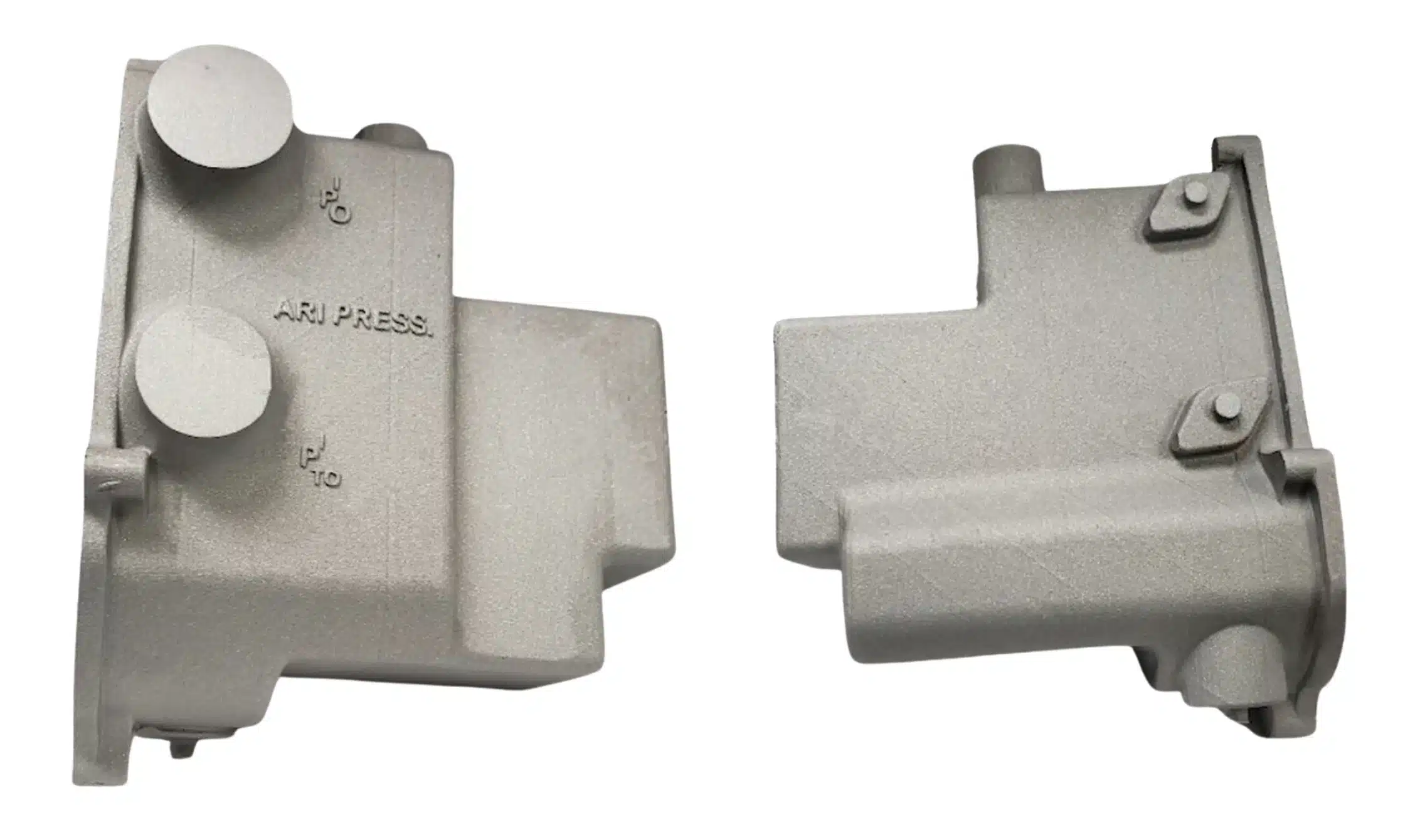
Our Industrial Metal Casting Process

Digital Model Analysis and Optimization
Every casting starts with a fully optimized digital model — from CAD files, 2D drawings, physical samples, or 3D scans:

LAMP™ Ceramic Shell 3D Printing
Our proprietary Large Area Maskless Photopolymerization process prints monolithic ceramic shells directly from digital files — no wax patterns, core assembly, or traditional mold building:

Precision Metal Casting and Delivery
Printed ceramic shells are sintered to over 99.5% density before pouring. We produce a broad range of industrial alloys for demanding applications:
Why Choose Rapid Precision Castings for Industrial Metal Castings?
Proven Industrial Expertise
Our investment casting foundry delivers validated performance for heavy equipment, manufacturing, construction, mining, and processing sectors:
Technology Leadership and Validation
LAMP™ ceramic 3D printing is backed by government-funded programs and intellectual property:
Complete Domestic Manufacturing Solution
Every part stays within a fully domestic supply chain for compliance and rapid industrial support:
Our Industrial Metal Casting Manufacturing Services
We serve customers nationwide in heavy equipment, machinery, and manufacturing industries from our Atlanta, Georgia, Digital Foundry™:
Southeast: Georgia, Florida, Alabama, Tennessee, South Carolina, North Carolina
Industrial Heartland: Michigan, Ohio, Indiana, Illinois, Wisconsin, Pennsylvania
Energy & Mining: Texas, Colorado, Wyoming, West Virginia, Louisiana
Manufacturing Hubs: California, Washington, New York, Massachusetts, Connecticut
Agricultural Equipment Centers: Iowa, Nebraska, Kansas, Minnesota, Missouri
Contact Us Today
Ready to eliminate tooling costs, compress lead times, and produce precision industrial metal castings with advanced investment casting technology?
Frequently Asked Questions About Industrial Metal Castings
Industrial metal castings are precision-manufactured metal components produced through casting processes for use in heavy equipment, machinery, manufacturing systems, and industrial infrastructure. These components include pump housings, valve bodies, gear blanks, machine tool parts, and structural fittings.
The most common industrial casting methods are sand casting (for large, simple parts), investment casting (for complex, precision parts), die casting (for high-volume production), and centrifugal casting (for cylindrical components). Investment casting produces the highest accuracy and finest surface finish among these methods.
Rapid Precision Castings produces industrial metal castings from its Atlanta, GA facility. RPC's DirectPour™ process delivers precision castings for heavy equipment, machinery, and industrial applications with faster lead times and lower costs than traditional investment casting foundries.
RPC produces pump housings and impellers, valve bodies and seats, gear blanks, machine tool components, conveyor system parts, heat exchanger hardware, structural brackets, and custom industrial fittings. The process is especially suited to components requiring complex internal geometries, tight tolerances, or rapid delivery.
When critical industrial equipment fails, replacement casting lead times of 52–80 weeks are unacceptable. RPC's DirectPour™ process delivers replacement castings in as little as 10 days, and can reproduce legacy parts from drawings or 3D scans — even when original tooling no longer exists.
RPC casts industrial components in stainless steels (304, 316, 17-4 PH), carbon and alloy steels, aluminum alloys, nickel alloys for corrosion-resistant and high-temperature applications, and tool steels for wear-resistant components. Material selection is matched to the specific operating environment.
Yes. DirectPour™ eliminates tooling, so there is no minimum order quantity requirement. Single replacement parts, small batches of specialty components, and prototype units are all produced at the same per-part cost as larger production runs.
RPC works from CAD models, engineering drawings, or 3D scans of existing parts. For components where no digital model exists, RPC can coordinate 3D scanning and CAD reconstruction to create the digital file needed for ceramic shell printing. This capability is valuable for reproducing legacy industrial parts.
RPC offers full quality documentation including material certification with chemical analysis, mechanical testing per ASTM standards, non-destructive testing (radiography, FPI, dimensional inspection), and process traceability documentation. Testing is performed per customer specifications and applicable industry standards.
DirectPour™ eliminates tooling costs (typically $50,000–$500,000 per design) and reduces per-part casting costs by up to 50%. For industrial applications requiring custom or short-run components, the total project cost is significantly lower than traditional casting because there is no tooling design, manufacturing, or maintenance expense.