
Robotic Components |
Investment Casting & Precision Manufacturing
Precision robotic components and industrial robot parts delivered in days — not months — with zero tooling investment.
We produce high-performance robotic components and robotic arm components using our patented LAMP™ ceramic 3D printing technology — delivering end effector housings, actuator components, and industrial robot arm parts in as little as 10 days at 50% lower cost, with no dies, patterns, or tooling required.
Benefits of Rapid Precision Castings' Production of Robotic Components
Zero Tooling Investment Required
LAMP™ eliminates dies, patterns, and molds entirely for robotic components and robot arm castings:
10x Faster Production Lead Times
Our Digital Foundry™ delivers robotic parts in as little as 10 days:
Advanced Materials for High-Performance Robotic Systems
Our LAMP™ process handles the full robotics alloy range for end effectors, actuator housings, and robot arm components:
Industry Applications
End Effector and Gripper Housings
The end effector is the most critical part of a robotic arm — without it, a robot arm cannot perform tasks like welding, pick-and-place, or material handling. Our LAMP™ process delivers complex pneumatic, hydraulic, and electrical integration geometries in a single monolithic casting operation:
- Gripper housings and tool changer bodies with integrated pneumatic or hydraulic passages.
- Sensor mount brackets, wrist joints, and end-of-arm tooling with precision bore geometry.
- Custom end effectors for industrial robots, collaborative robots, and robotic arms with complex internal flow paths.
- Feature resolution of tens to hundreds of microns with ±2-micron XYZ positioning accuracy.
Actuator Housings and Arm Structural Components
Weight, precision, and mechanical performance are tightly interlinked for robotic arms and industrial robots. Metal casting allows exact wall thickness control — reducing material in non-critical areas while reinforcing stress-bearing regions:
- Actuator housings with integrated wiring channels, hydraulic or pneumatic passages, and precision mounting geometry.
- Robot arm links, joints, and chassis bases for articulated robots, cylindrical robots, and collaborative robots.
- Mobile robot chassis components and structural bases requiring tight dimensional control.
- Complex internal passages, impossible via traditional multi-piece core assembly.
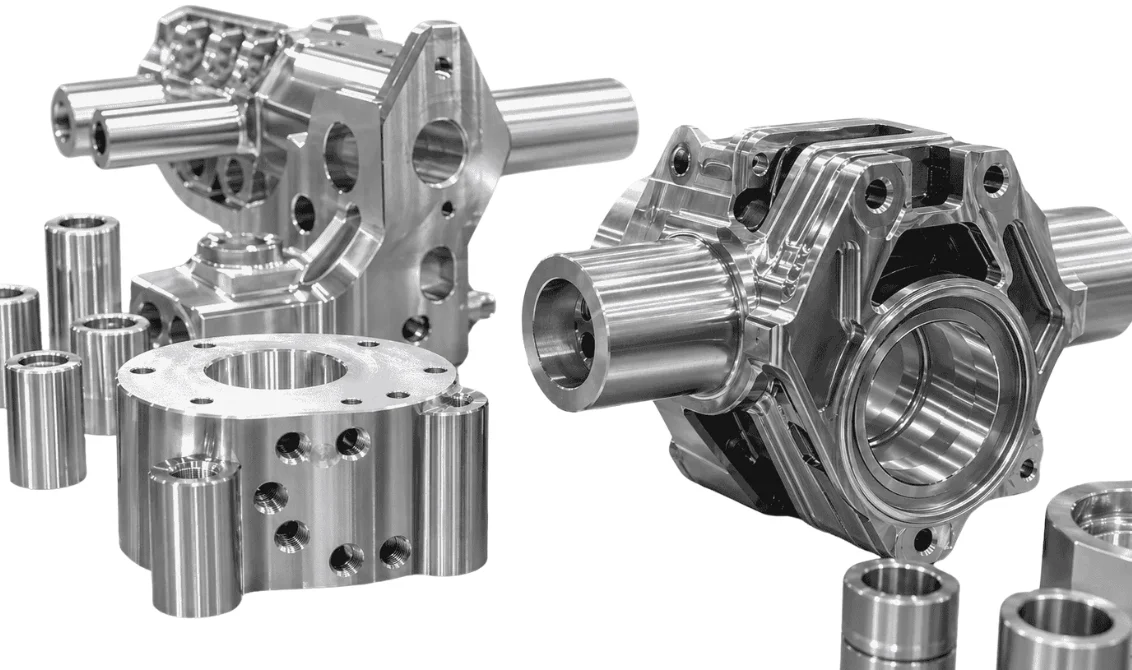
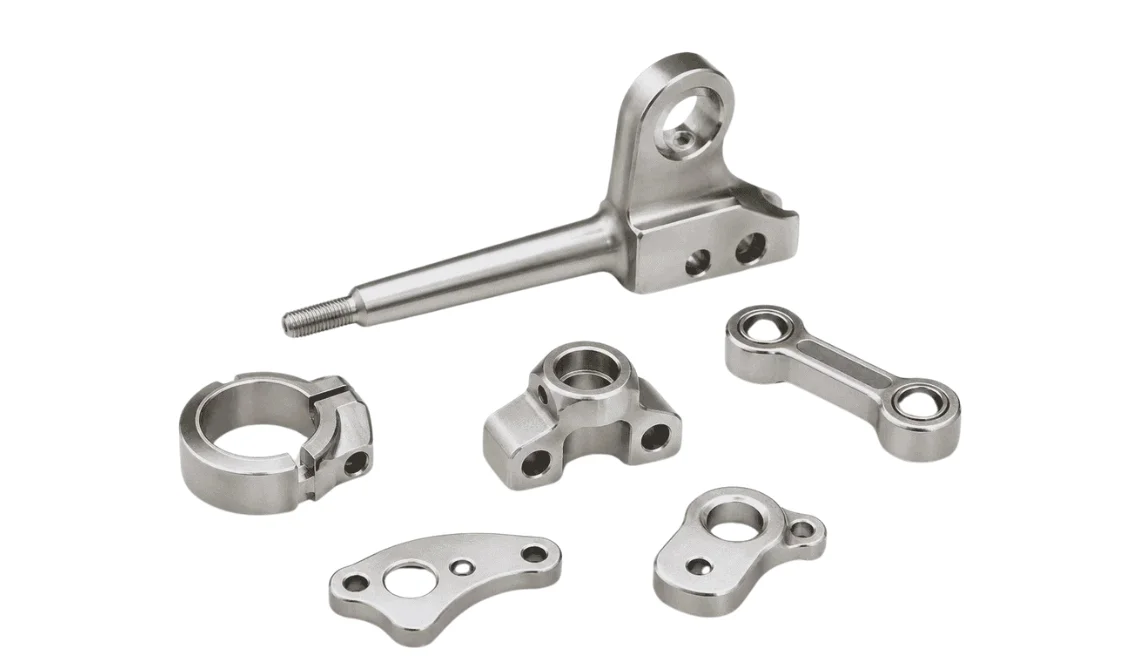
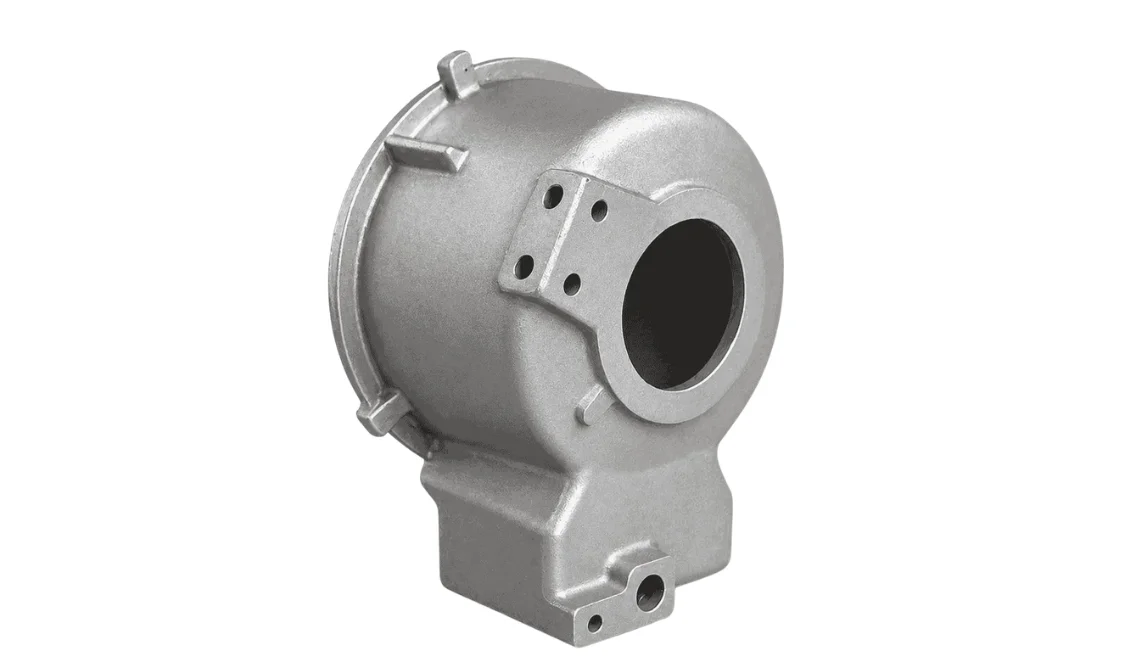
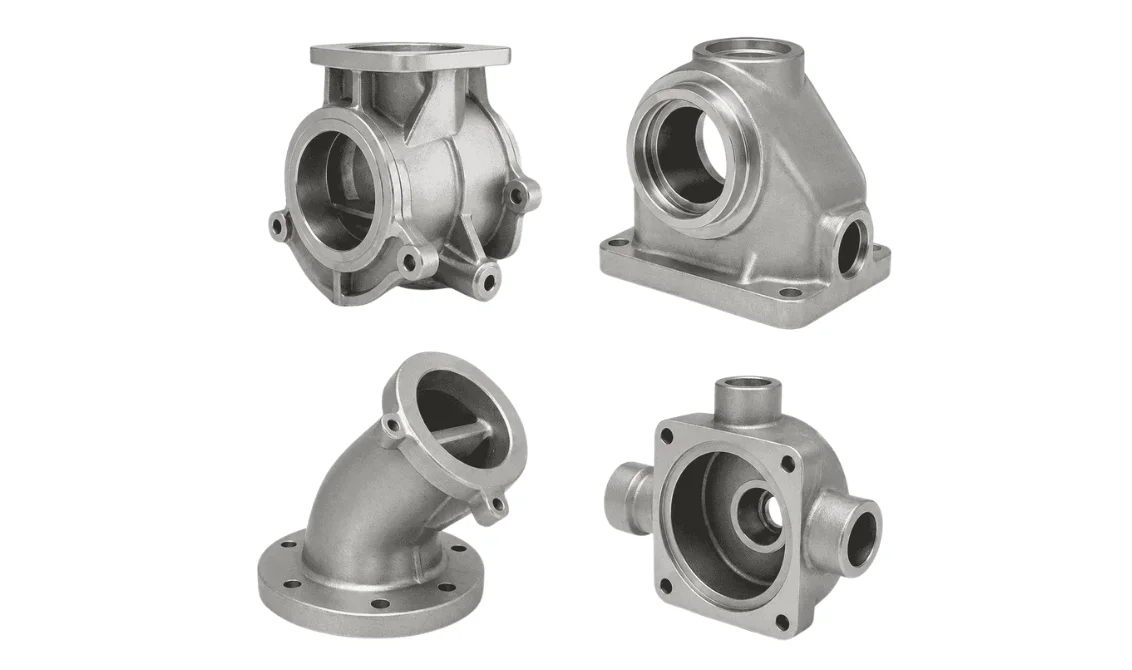
Robotics Applications Gallery
Our Robotic Component Manufacturing Process

Digital Model Analysis and Optimization
Every robotic component casting starts with a fully optimized digital model — from CAD files, 2D drawings, or 3D scans. All features are integrated into a single printable ceramic shell:

LAMP™ Ceramic Shell 3D Printing
Our Large Area Maskless Photopolymerization process prints ceramic investment casting shells directly from your digital file — no wax patterns, no core assembly:

Precision Metal Casting and Delivery
Printed ceramic shells are thermally processed and sintered before pouring. Robotic components are cast using air-melt and vacuum-melt processes:
Why Choose Rapid Precision Castings for Robotic Components?
Proven Industrial Automation Experience
Rapid Precision Castings has a validated track record of producing mission-critical components for government and military programs:
Technology Leadership and Validation
Our LAMP™ ceramic 3D printing innovation is backed by over a decade of government-funded validation and intellectual property protection:
Complete Domestic Supply Chain
True NDAA compliance depends on end-to-end domestic sourcing — from raw material to delivery:
Our Component Manufacturing Services
We support industrial automation, defense robotics, and advanced manufacturing across the U.S. from our Digital Foundry™ in Atlanta, Georgia:
Southeast Region: Georgia, Florida, Alabama, Tennessee, South Carolina, North Carolina
Defense Corridors: Washington DC Metro Area, Virginia, Maryland, Colorado Springs
Aerospace & Robotics Hubs: California, Texas, Washington, Ohio, Connecticut
Industrial Centers: Michigan, Illinois, Pennsylvania, New York, Massachusetts
Military Installations: Supporting all major Air Force, Navy, and Army facilities
Contact Us Today
Eliminate tooling costs, compress lead times, and produce precision robotic components for industrial robots and robotic arms with the most advanced casting technology in the United States.
Frequently Asked Questions About Robotic Components
The main components of a robotic arm include joints and actuator housings, structural link segments, end-effector mounts, gear train housings, sensor mounting hardware, and base/pedestal structures. Many of these require precision-cast metal components for the combination of strength, accuracy, and weight optimization.
Investment casting is the preferred method for robotic components because it delivers the dimensional accuracy, surface finish, and material selection range required for precision mechanical systems. RPC's DirectPour™ process adds the advantage of rapid delivery and complex geometry capability without tooling investment.
Rapid Precision Castings produces robotic components from its Atlanta, GA facility. RPC's DirectPour™ process is well-suited to the robotics industry's need for precision castings in small quantities, rapid prototyping, and iterative design development.
RPC produces joint housings, actuator enclosures, structural link segments, gear train housings, end-effector mounts and adapters, sensor brackets, and base pedestal structures. The process excels at components requiring precision dimensional control, complex internal features, and lightweight optimization.
Robotic components are typically cast in aluminum alloys (A356, A357) for lightweight structural elements, stainless steels for wear-resistant and corrosion-resistant applications, and specialty alloys for high-performance servo housings and actuator components. Material selection is matched to each component's mechanical and environmental requirements.
Robotics development involves frequent design iterations as hardware teams optimize for precision, weight, and durability. DirectPour™ delivers functional metal prototypes in 10 days without tooling investment — enabling hardware teams to test and iterate at a pace previously possible only with 3D-printed plastic prototypes, but in production-grade metal.
Yes. LAMP™ technology can cast topology-optimized and organic geometries generated by computational design algorithms. These structures minimize weight while maximizing stiffness and strength — critical for robotic components where reducing arm mass improves speed, accuracy, and payload capacity.
RPC's LAMP™ technology achieves feature resolution of tens to hundreds of microns with surface finishes below 4 microns RMS. Typical investment casting tolerances of ±0.005" per inch are achievable, with tighter tolerances available through secondary machining of critical features.
Yes. Collaborative robot manufacturers benefit from RPC's ability to produce lightweight, smooth-surfaced castings in small quantities — critical for cobots designed to work alongside humans. The rapid iteration capability allows cobot developers to refine ergonomics, safety features, and structural performance through multiple casting iterations.
There is no minimum order quantity. RPC produces single-unit prototypes through short production runs, with consistent per-part pricing because there is no tooling to amortize. This is ideal for robotics startups and R&D teams that need functional metal components for testing and validation.