SLE™ Repair Services |
Additive Restoration
Our SLE™ (Scanning Laser Epitaxy) technology delivers advanced additive restoration for turbine engine hot-section components across the United States. Purpose-built for high-performance investment castings operating in high-temperature environments — including alloys conventionally deemed “non-weldable” — SLE™ produces crack-free, fully dense deposits with epitaxial continuity to the parent material, restoring mechanical properties that match or exceed the original metal casting without the cost or lead time of component replacement.
Request Quote
Call Us: 470-225-6987
Benefits of Additive Restoration
Eliminates Tooling Investment and Lead Times
SLE™ additive restoration is driven entirely by your component design and damage restoration assessment of damage , with no minimum order quantities required. This compresses cost and calendar time versus conventional repair:
skip render: ucaddon_uc_material_bullets
For operators managing aging fleets or defense sustainment programs, this direct path from assessment to restored component can be transformative.
Achieves Superior Material Properties
SLE™ delivers metallurgical results that conventional repair methods cannot replicate, producing metallurgical deposits with properties that match or exceed the original casting:
skip render: ucaddon_uc_material_bullets
No other additive process consistently achieves crack-free deposition across this class of high gamma-prime superalloys.
Enables Precise Microstructure Control
SLE™ gives engineers direct control over deposit microstructure, targeting the exact morphology required for each alloy and component type:
skip render: ucaddon_uc_material_bullets
This level of microstructural fidelity is what separates SLE™ from conventional additive repair approaches.
Critical Signs Your Turbine Components Need Additive Restoration
Recognizing the right moment for SLE™ intervention is as important as the restoration itself — waiting too long can make a component unrecoverable, while acting at the right stage preserves parent metallurgy and maximizes component life. Watch for these indicators:
skip render: ucaddon_uc_material_bullets
Our engineering team specializes in evaluating restoration candidates and determining whether SLE™ additive restoration is the most cost-effective path forward for your specific components and operational requirements.
What is SLE™ Technology (Scanning Laser Epitaxy)?
Turbine Component Repair
SLE™ is a metal powder bed-based laser additive manufacturing technology developed for nickel-base superalloys, capable of producing equiaxed, directionally solidified, and single-crystal microstructural morphologies through a precisely controlled deposition sequence. Gas-atomized superalloy powder is spread onto the build platform, and a high-power fiber laser selectively melts the bed to form metallurgically bonded deposits:
- 1070nm fiber laser scans the powder bed in a controlled raster pattern.
- Melt pool bonds directly to the underlying substrate with full metallurgical continuity.
- Deposits reach up to 2.5mm per pass in a single processing cycle.
- Validated for aerospace and industrial gas turbine (IGT) hot-section applications.
- 300mm × 300mm build area within a 2.5m × 2.5m × 2.5m system footprint.
Every deposit is traceable, repeatable, and engineered to restore original component geometry and properties.
Superalloy Capabilities
SLE™ is one of the very few demonstrated successes for crack-free deposition of notoriously “non-weldable” hot-section alloys, making it suitable for both component repair and new-make fabrication across the full spectrum of high gamma-prime nickel-based superalloys:
- Equiaxed alloys: MAR-M247, IN100 — including crack-prone, non-weldable grades.
- Directionally solidified alloys: René 80, René 141, René 142.
- Single-crystal alloys: CMSX-3, CMSX-4, René N5, PWA 1480, PWA 1484.
- Crack-free MAR-M247 deposits represent one of the first reported successes for a non-weldable alloy repair of its kind in production.
No other additive process delivers validated, crack-free results across this complete range of hot-section superalloy families.
Our SLE™ Additive Restoration Process
 01
01
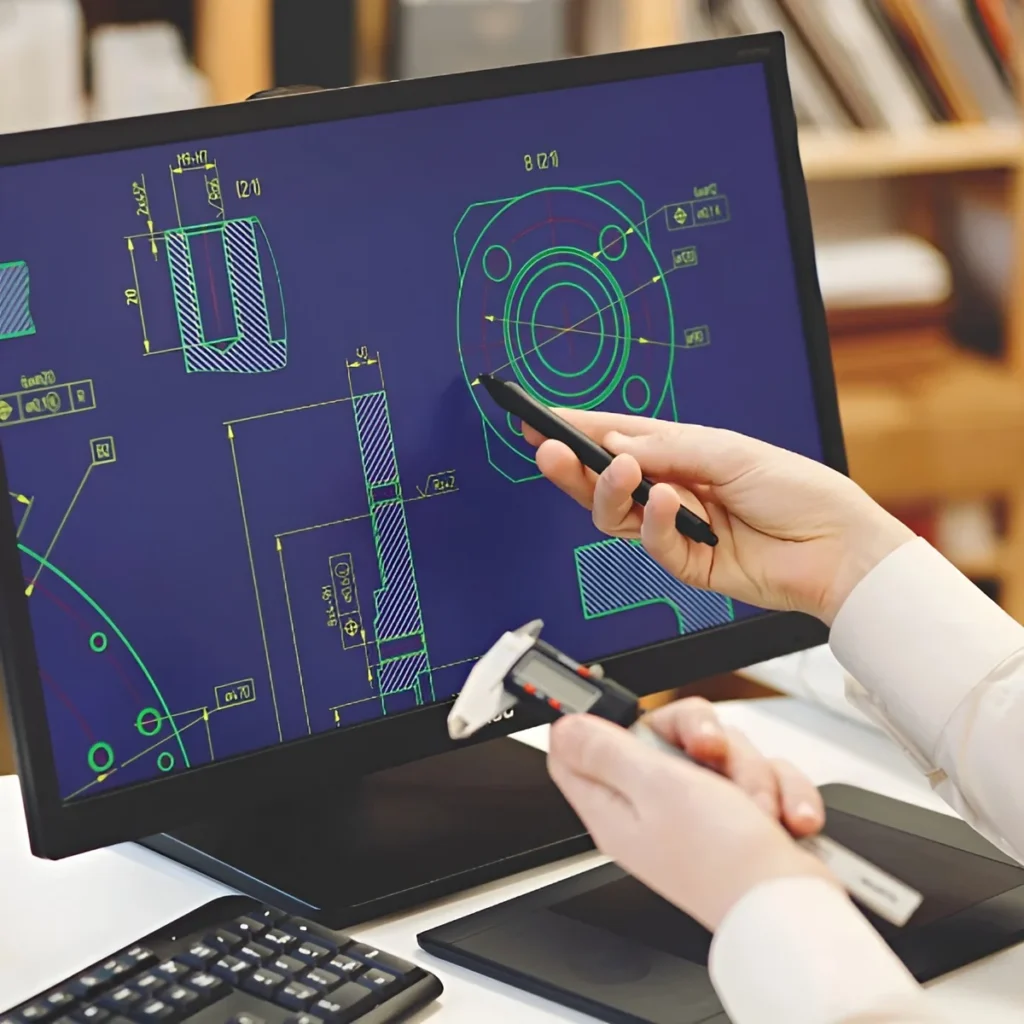
Component Assessment and Preparation
Every restoration project begins with a structured engineering evaluation that references the original casting process specifications to define a precise repair plan before any material is deposited:
skip render: ucaddon_uc_material_bullets
All findings are documented in a formal repair plan, ensuring full metallurgical traceability from intake to delivery.
 02
02
Laser Processing and Material Deposition
Galvanometer-controlled laser movement and high-resolution raster scanning enable superior thermal control, producing porosity-free, crack-free deposits exceeding 1000 µm in thickness. A 2+ kW fiber laser at 1070nm wavelength drives the deposition sequence inside a moisture- and oxygen-free process chamber:
skip render: ucaddon_uc_material_bullets
Every deposit is produced under tightly controlled conditions for longitudinal and transverse consistency.
 03
03
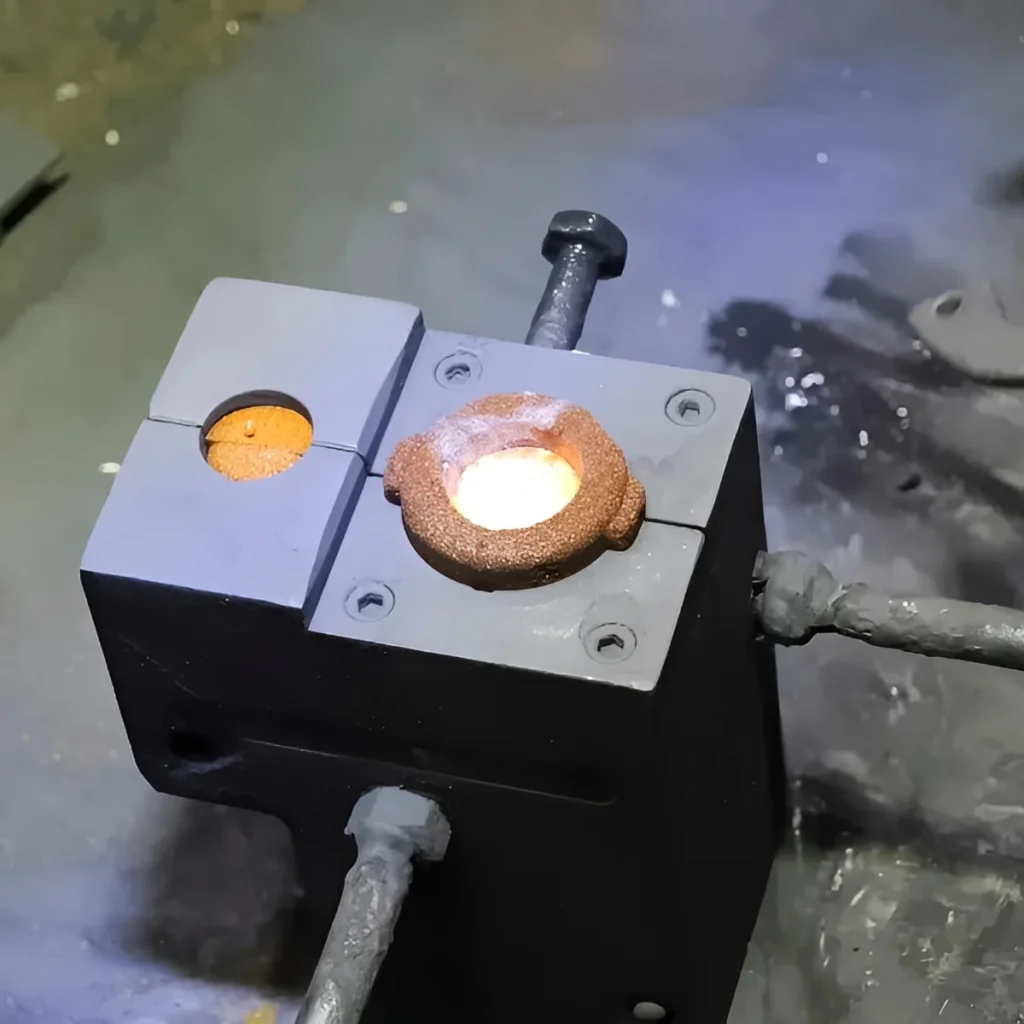
Post-Processing and Quality Verification
Following deposition, components undergo alloy-specific heat treatment and a structured quality verification sequence to confirm full restoration to specification:
skip render: ucaddon_uc_material_bullets
All quality records, heat treatment documentation, and inspection results are compiled for full aerospace and defense traceability.
SLE™ Additive Restoration Pricing
Pricing for SLE™ restoration is structured around the engineering and material inputs specific to each component and repair scenario. Key cost drivers include:
skip render: ucaddon_list
Contact us to receive a detailed cost comparison versus full component replacement — in most cases, SLE™ restoration delivers substantial savings while preserving the parent material and avoiding the long lead times of new procurement.
Why Choose Rapid Precision Castings for SLE™ Additive Restoration?
Proven Industry Experience
SLE™ technology originates from US Navy-funded research and is backed by 26+ patents across six countries. Our program history spans the most demanding platforms in U.S. aerospace and defense:
skip render: ucaddon_uc_material_bullets
No general additive manufacturing provider carries this combination of program heritage and superalloy credentials.
Advanced Real-Time Process Control
SLE™ systems integrate a closed-loop suite of process control tools that continuously adjust energy deposition throughout every build cycle:
skip render: ucaddon_uc_material_bullets
This integrated process control is what makes crack-free deposition in non-weldable alloys repeatable — not just a laboratory result.
Comprehensive Superalloy Expertise
SLE™ has been validated across the full spectrum of high gamma-prime nickel superalloy systems, applied to the most demanding components in U.S. aerospace and defense:
skip render: ucaddon_uc_material_bullets
This level of alloy expertise is beyond what any general AM provider can replicate.
Service Areas Across the United States
We provide SLE™ additive restoration services to qualified customers nationwide from our Atlanta, Georgia facility, with specialized packaging and logistics protocols designed for high-value turbine components:
skip render: ucaddon_list
Secure, traceable shipping coordination for high-value superalloy components is available as part of every restoration engagement, ensuring safe transit and documented chain of custody throughout the process.
Start Your Additive Restoration Project Today
Our engineering team is available for immediate consultation on urgent and planned turbine component restoration requirements. Most projects can be scoped and initiated within days of initial contact — not weeks. To begin:
Get in Touch
Visit our contact us page
Email
support@rapidprecisioncastings.com
Phone
470-225-6987
Address
1876 Defoor Ave NW, Suite 3, Atlanta, GA 30318, USA
Same-day response is available for urgent turbine component repair inquiries — contact us directly, and our team will prioritize your assessment.
Frequently Asked Questions About Additive Restoration
skip render: ucaddon_uc_icon_accordion
Technical Evidence and Primary Sources
These records support the technology and research statements on this page. Government project records describe scope, participants and targets; they do not by themselves establish completion of every target.