
Aviation 3D Printing |
Custom Aircraft Parts
In aviation, castings and forgings are consistently the supply chain’s bottleneck, and aircraft worth hundreds of millions of dollars can be delayed or grounded because a single component has not arrived. For urgent requirements, review the AOG casting support pathway.
Our breakthrough LAMP™ technology solves this directly — delivering precision aviation components up to 10x faster at up to 50% lower cost, with zero tooling investment required.
Benefits of Aviation 3D Printing
Rapid Aircraft Component Production
For qualified scopes, DDM reports that LAMP™ can reduce a 52–80 week tooling-dependent benchmark to an initial casting in as little as 10 days. Actual timing depends on geometry, alloy, technical-data readiness, inspection, qualification, foundry capacity, customer approvals, and the requested deliverable. Review our aircraft sustainment casting pathway and the technical evidence and source limitations. Key production advantages include:
Zero Tooling Investment Required
Where traditional manufacturing methods require $50K–$200K+ in upfront hard tooling per component, our ceramic 3D printing process eliminates that cost for aviation programs of all sizes:
Superior Material Options for Aircraft Applications
Our process supports hundreds of advanced materials — from lightweight aluminum castings that improve fuel efficiency and aircraft performance to single-crystal nickel superalloys — all third-party qualified to ASTM standards for aerospace applications. Material capabilities include:
Industry Applications
Legacy Part Reproduction
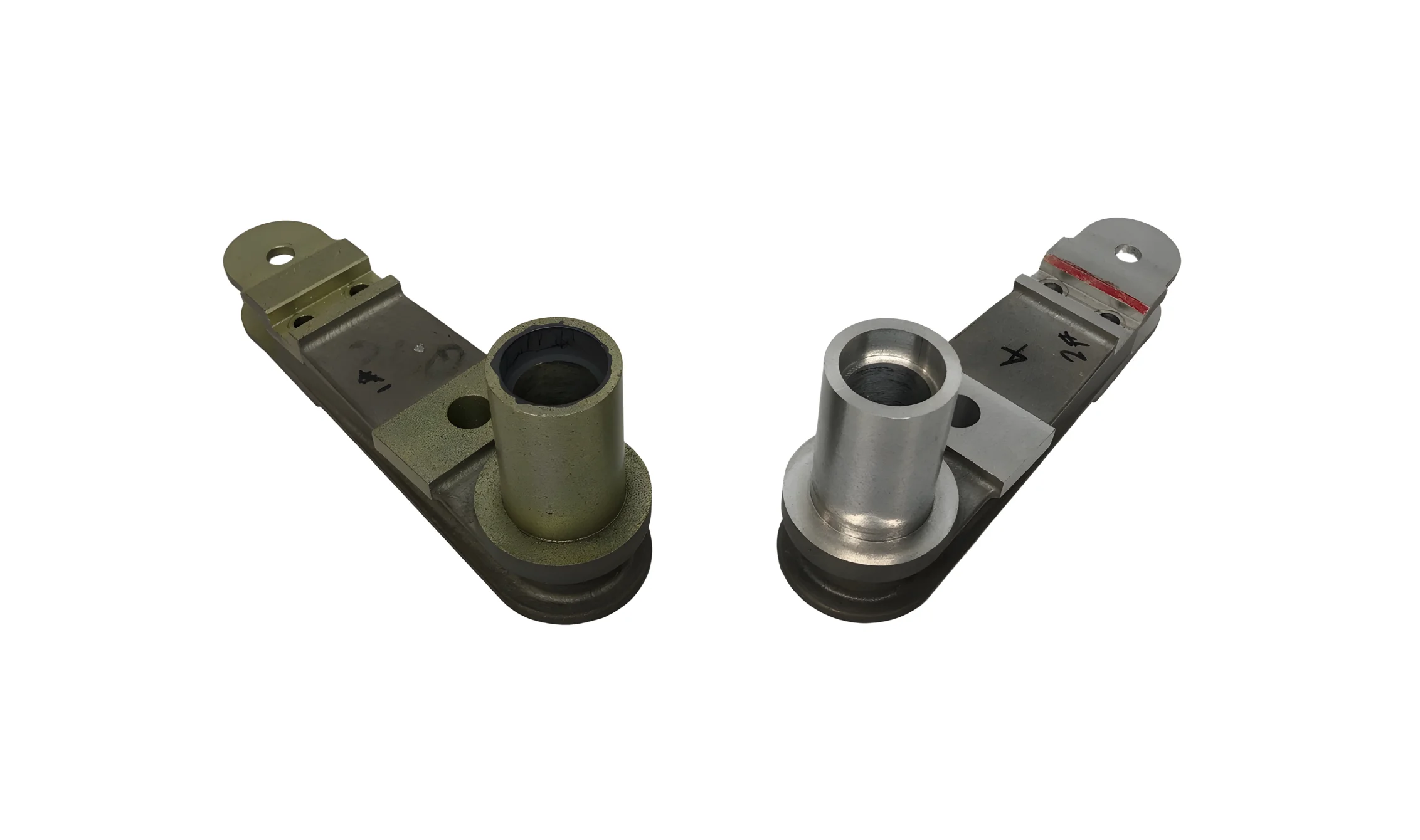
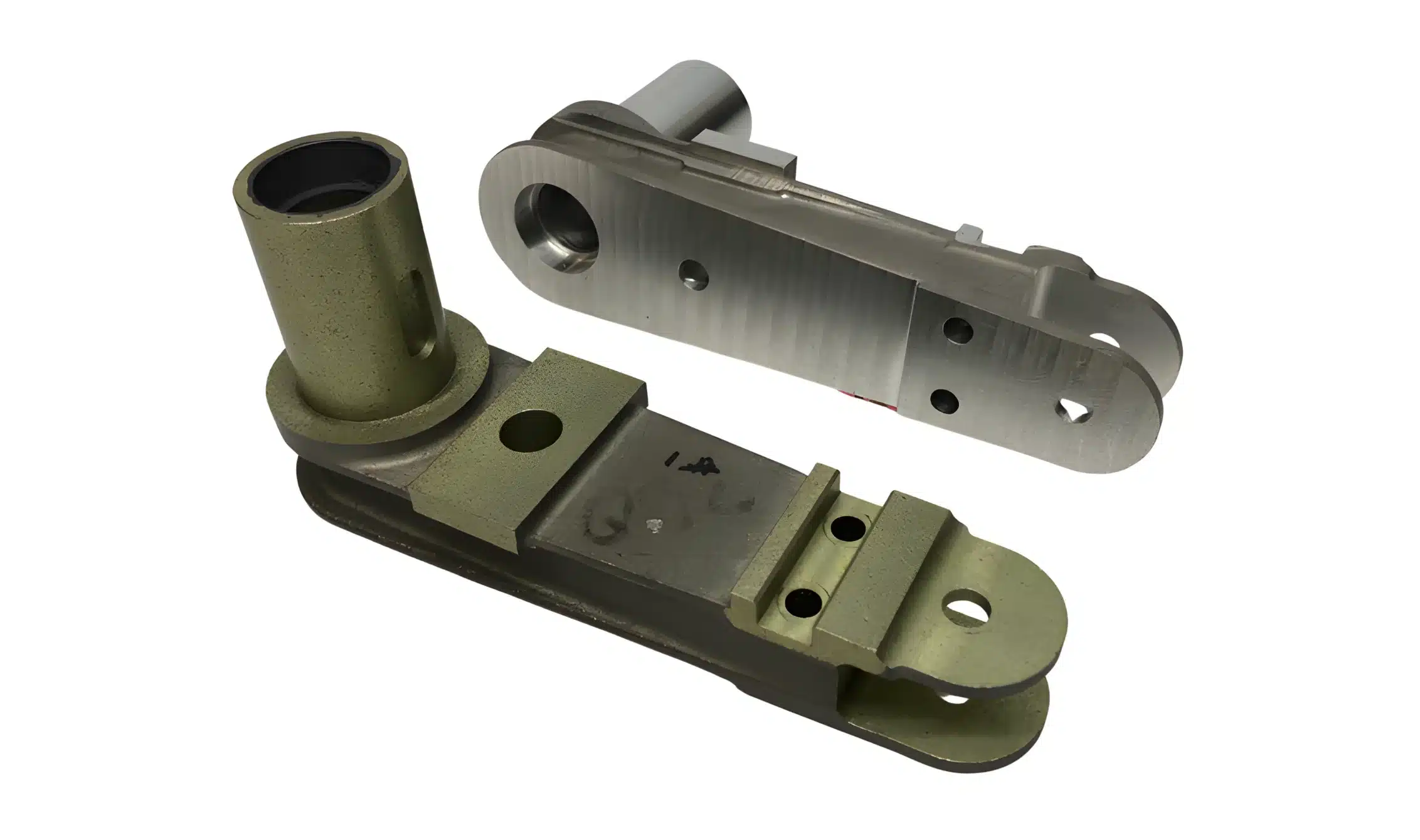
When a legacy aircraft component goes obsolete — original tooling lost, suppliers defunct, lead times measured in years — LAMP™ technology restores full production capability directly from CAD with no need to retool or qualify a new foundry. Proven AMS 2175 Class 1 Grade A results span active USAF sustainment programs, including the B-2 Spirit, A-10 Thunderbolt II, and C-5 Galaxy. Engineering changes can be incorporated at zero additional tooling cost.
- USAF fleet support — B-2, A-10, and C-5 programs supported through America Makes sustainment initiatives.
- No supplier dependency — reproduce any casting from CAD without original tooling or foundry relationships.
- Design improvements welcomed — incorporate engineering changes, dimensional updates, or alloy substitutions during reproduction at no added tooling cost.
- Full documentation package — material certifications, radiographic records, and dimensional reports delivered with every order.
Custom Aircraft Components
Where conventional casting processes impose hard limits on internal geometry, wall thickness, and core assembly, LAMP™ removes those constraints. Aerospace engineers can fabricate turbine hot-section parts, airfoils, vanes, and shrouds with cast-in internal cooling channels and unmoldable geometries as a single net-shape casting from CAD. Custom component capabilities include:
- Integrated internal cooling channels — cast-in passages and conformal geometries produced in a single print, eliminating multi-piece core assembly.
- Complex geometries capability — undercuts, thin walls, and unmoldable internal features produced directly from CAD with no tooling constraints.
- Hot-section superalloy components — turbine blades, fuel nozzles, vanes, and shrouds cast in single-crystal and directionally solidified alloys.
- Rapid prototyping to production — first articles in 10 days, scalable to bridge and production quantities without retooling.
Aviation Applications Gallery
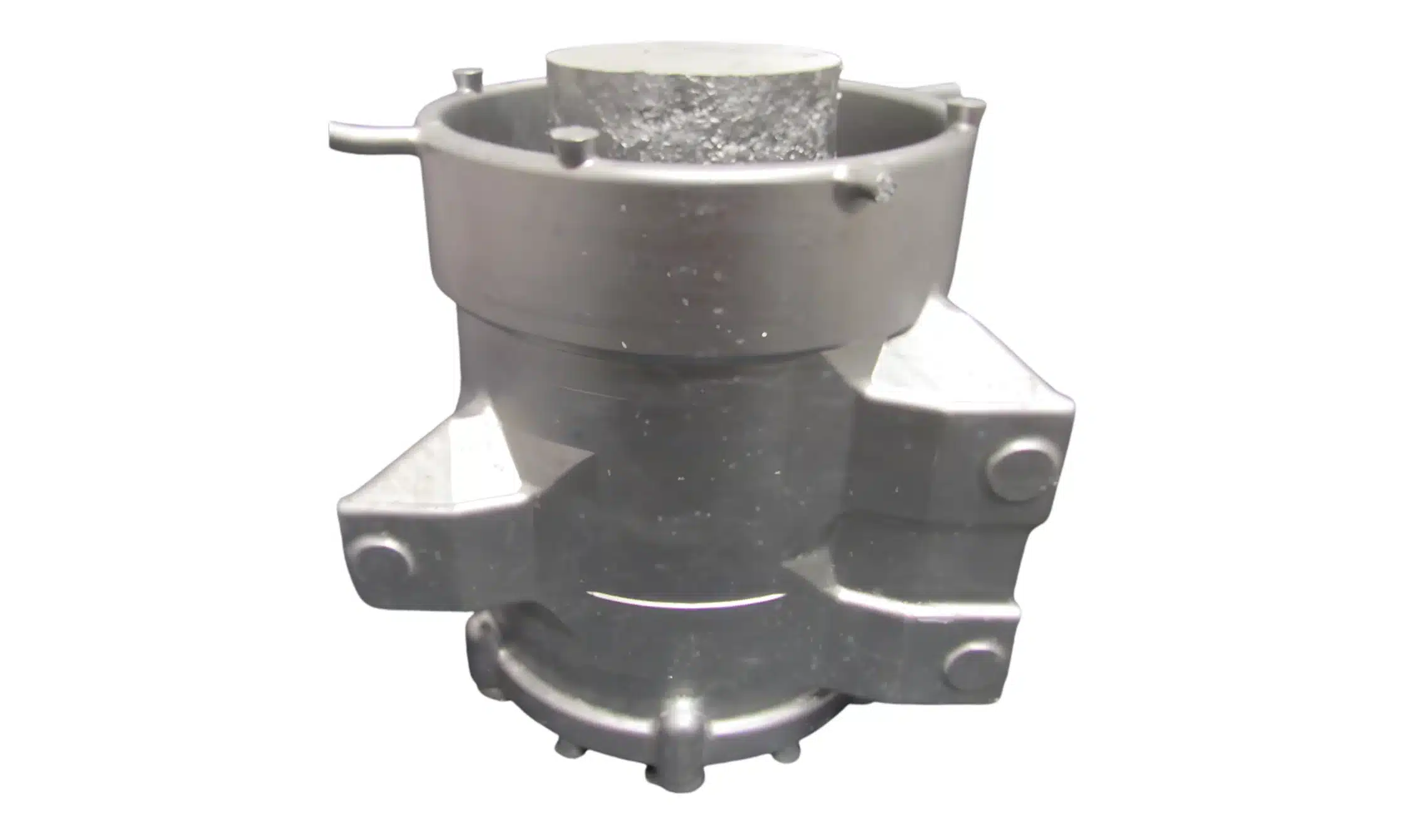
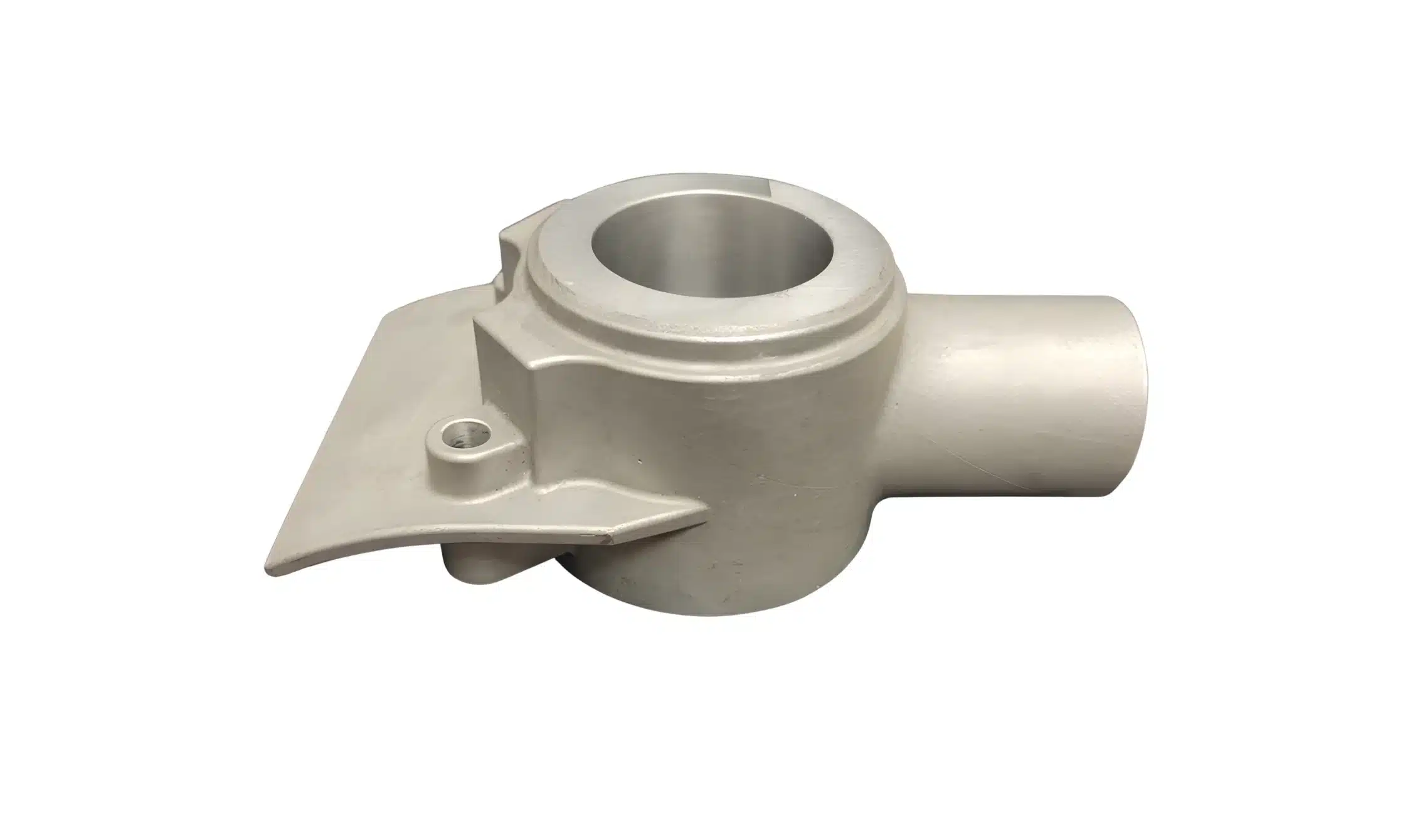
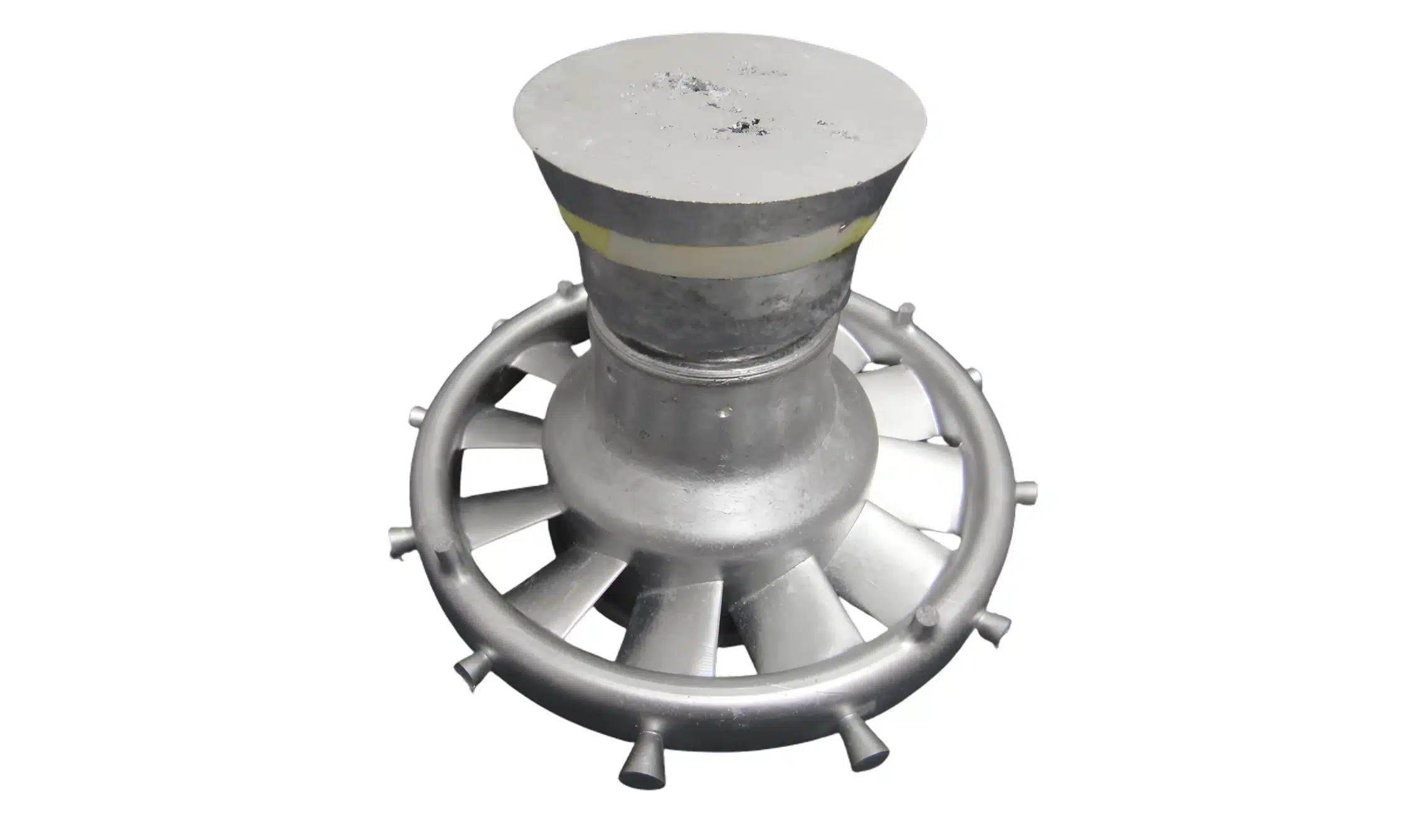
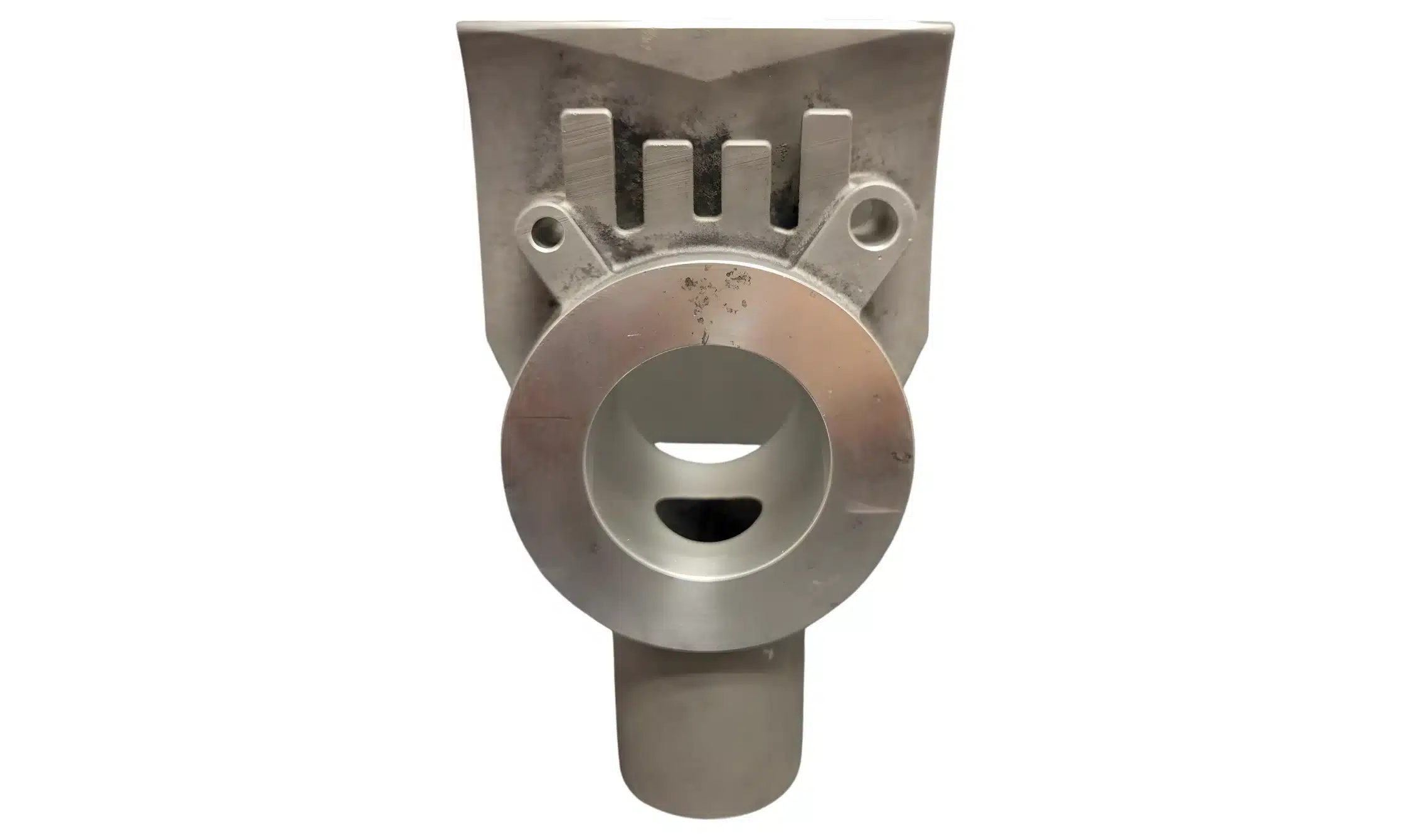
Our Aviation 3D Printing Process

Digital Design and Engineering
Our engineering team optimizes your CAD model for ceramic shell printing — core design, gating, and shrinkage compensation — using casting simulation software, completed within 24 hours:

LAMP™ Ceramic Shell Printing
Our Large Area Maskless Photopolymerization technology creates ceramic shells with integrated cores in a single printing operation — eliminating seven of twelve traditional investment casting steps — at 15-micron pixel resolution with ±2-micron positioning accuracy and a sub-4-micron RMS surface finish. Printing specifications include:

Precision Casting and Finishing
Printed ceramic shells undergo controlled thermal processing — binder burnout and high-temperature sintering — before our DirectPour™ process delivers ready-to-pour shells to partner foundries or handles complete in-house casting. All castings undergo rigorous inspection to aerospace standards:
Why Choose Rapid Precision Castings for Aviation 3D Printing?
Proven Experience in the Aviation Industry
Born from a DARPA program, our technology is trusted by aerospace companies across the defense and commercial aerospace industry. Our credentials include:
Unmatched Technical Capabilities
Over a decade of R&D and 26+ patents across six countries give our LAMP™ technology capabilities no conventional ceramic 3D printing system can match. Core technical differentiators include:
Comprehensive Quality Systems
Every casting is produced to AMS 2175 Class 1 Grade A — the highest aerospace standard — with full traceability across NADCAP-certified, AS9100-compliant partner foundries. Quality assurance includes:
Areas We Serve
We serve aviation customers nationwide from our Atlanta, Georgia facility, with particular focus on the following aerospace manufacturing hubs and defense program regions:
Southeast — Georgia, Florida, Alabama, Tennessee, North Carolina, South Carolina
Southwest — Texas, Oklahoma (Tinker AFB/Robins AFB corridors), Arizona
Midwest — Ohio, Michigan, Indiana (aviation and industrial manufacturing centers)
West Coast — California, Washington (major aerospace OEM and defense prime locations)
Mid-Atlantic / Northeast — Virginia, Maryland, Pennsylvania, Connecticut (defense and government)
Nationwide — DirectPour™ ready-to-pour shells ship to partner foundries coast-to-coast
Wherever your operation runs, we deliver.
Contact Rapid Precision Castings for Aviation 3D Printing Solutions
Get in Touch
Visit our contact us page
Frequently Asked Questions
RPC's DirectPour™ process casts aircraft components in a full range of aviation-grade alloys including aluminum A356/A357 for structural components, nickel superalloys for turbine engine parts, stainless steels for hardware, and cobalt-chrome for high-temperature applications. The ceramic shell is 3D printed; the final part is a traditional metal casting.
RPC's process delivers aviation castings up to 10x faster than traditional methods (10 days vs. 52–80 weeks) at up to 50% lower cost by eliminating conventional wax-pattern tooling. The resulting parts are metallurgically equivalent to traditionally cast components because the same metal pouring, solidification, and finishing processes are used.
Parts produced through RPC's DirectPour™ process are standard investment castings — only the mold-making step is different. The final metal parts meet the same metallurgical specifications, dimensional tolerances, and inspection criteria as conventionally cast components, supporting FAA and military certification pathways.
Rapid Precision Castings offers aviation 3D printing casting services from Atlanta, GA, serving the aviation industry nationwide. RPC's patented technology is particularly well-suited for rapid prototyping, legacy part replacement, and short-run production for commercial and military aviation programs.
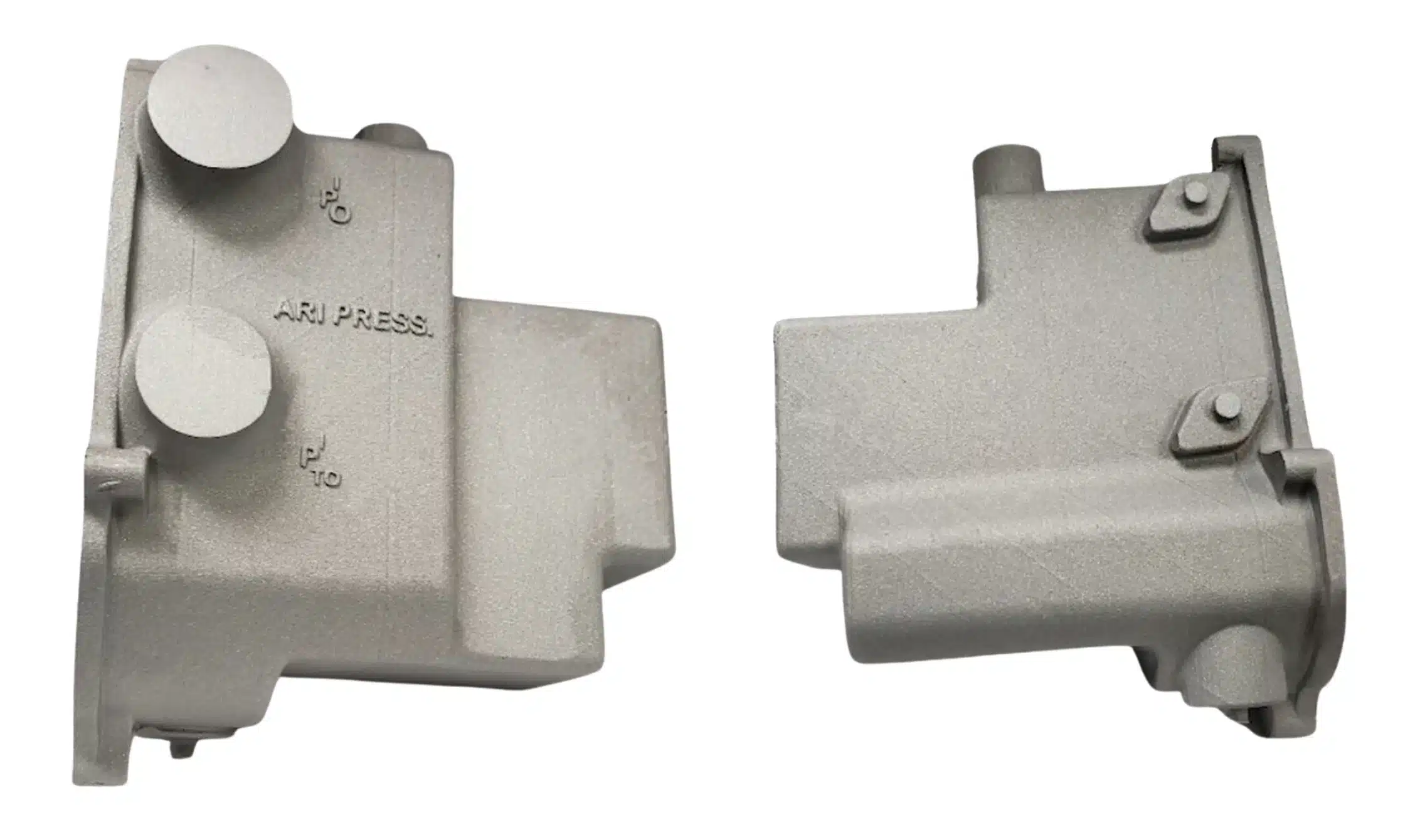
DirectPour™ produces a wide range of aviation components including turbine blades and vanes, hydraulic manifolds with complex internal passages, structural airframe fittings, engine casings, nozzle guide vanes, and flight control hardware. The process excels at components requiring complex internal geometries or those needed in small quantities where traditional tooling isn't justified.
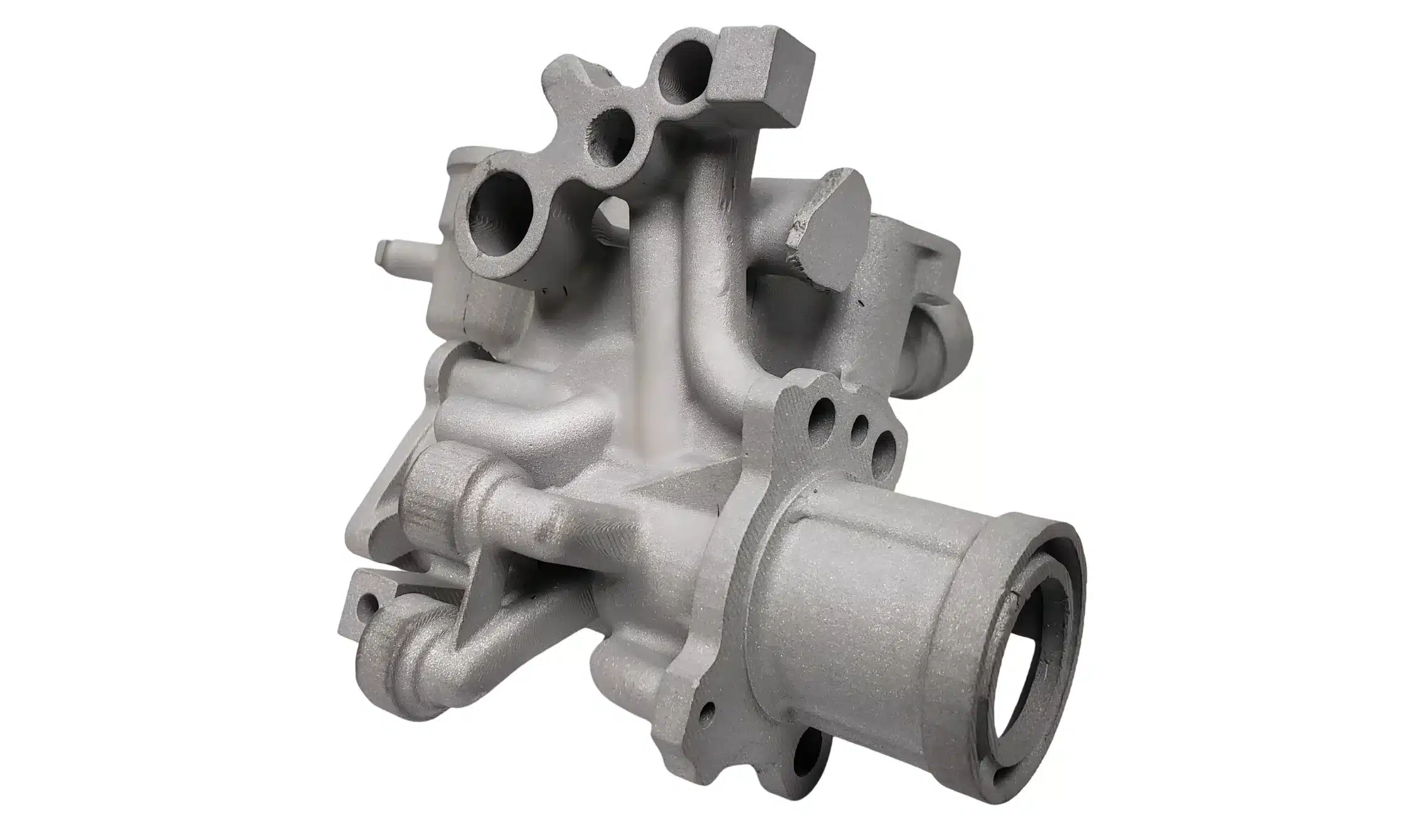
LAMP™ technology prints the ceramic shell with all internal cores fully integrated in a single operation. For example, RPC produced an aviation oil pump manifold (7" × 9" × 11") in aluminum A357 with multiple curvilinear internal channels — eliminating 12 separate sets of core tooling that would have been required in the traditional process.
Yes. RPC's process without conventional wax-pattern tooling is ideal for producing replacement parts for legacy aircraft where original tooling no longer exists. Parts can be manufactured from existing technical drawings, 3D scans of existing components, or reverse-engineered CAD models. This capability is critical for both commercial fleet operators and military sustainment programs.
There is no minimum order quantity. Because DirectPour™ eliminates tooling, the per-part cost is consistent whether ordering one prototype or hundreds of production parts. This makes RPC's process uniquely economical for single-unit replacements, small production runs, and iterative prototype development programs.
RPC follows rigorous quality processes for aviation components including material certification and traceability, process documentation for each casting, non-destructive testing (radiography, FPI, dimensional inspection) per customer and regulatory specifications, and production of castings in the same alloys and processes used for certified production parts.
RPC is the only investment casting company in the world using patented ceramic 3D printing technology. This eliminates the tooling bottleneck that defines traditional foundry lead times. While conventional suppliers require 52–80 weeks to produce a first article, RPC delivers in as little as 10 days — at up to 50% lower cost and with the ability to cast geometries impossible through traditional methods.