
Renewable Energy Components | Power Generation Parts
Advanced Precision Casting Solutions for Next-Generation Energy Systems
Rapid Precision Castings delivers precision-engineered renewable energy components through revolutionary ceramic 3D printing technology, eliminating traditional tooling constraints and reducing lead times by up to 90% for critical power generation applications across the United States.
Benefits of Renewable Energy Component Manufacturing
Zero Tooling Investment Required
Traditional manufacturing demands $50K–$200K+ in tooling with inflexible lead times. Our LAMP™ technology eliminates tooling, delivering first parts in 10 days from CAD files. Key advantages include:
Go from design to production with no tooling required.
90% Energy Reduction in Manufacturing
Our DirectPour™ process cuts energy consumption by up to 90% vs. traditional investment casting — federally validated through a $3.3M DOE ARPA-E project with GE Vernova. Key sustainability benefits include:
Rapid Prototype-to-Production Scaling
Our Digital Foundry™ scales seamlessly from prototype to full production — no retooling required, from small wind turbine parts to utility-scale gas turbine components. As global demand for clean energy infrastructure grows, our production capacity scales with your program. Key scaling advantages include:
Accelerate your development cycle without sacrificing quality or consistency.
Industry Applications
Power Generation Components
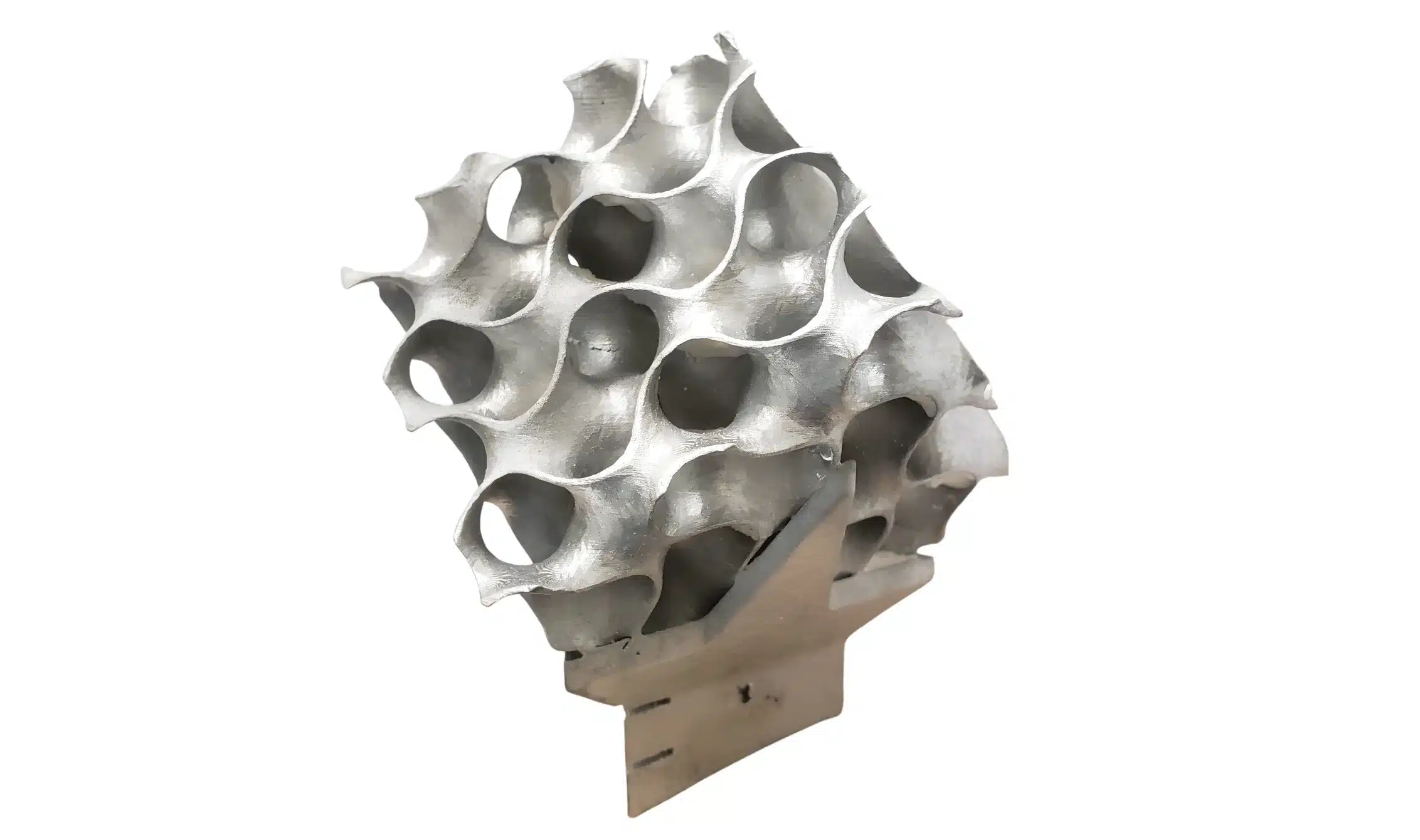
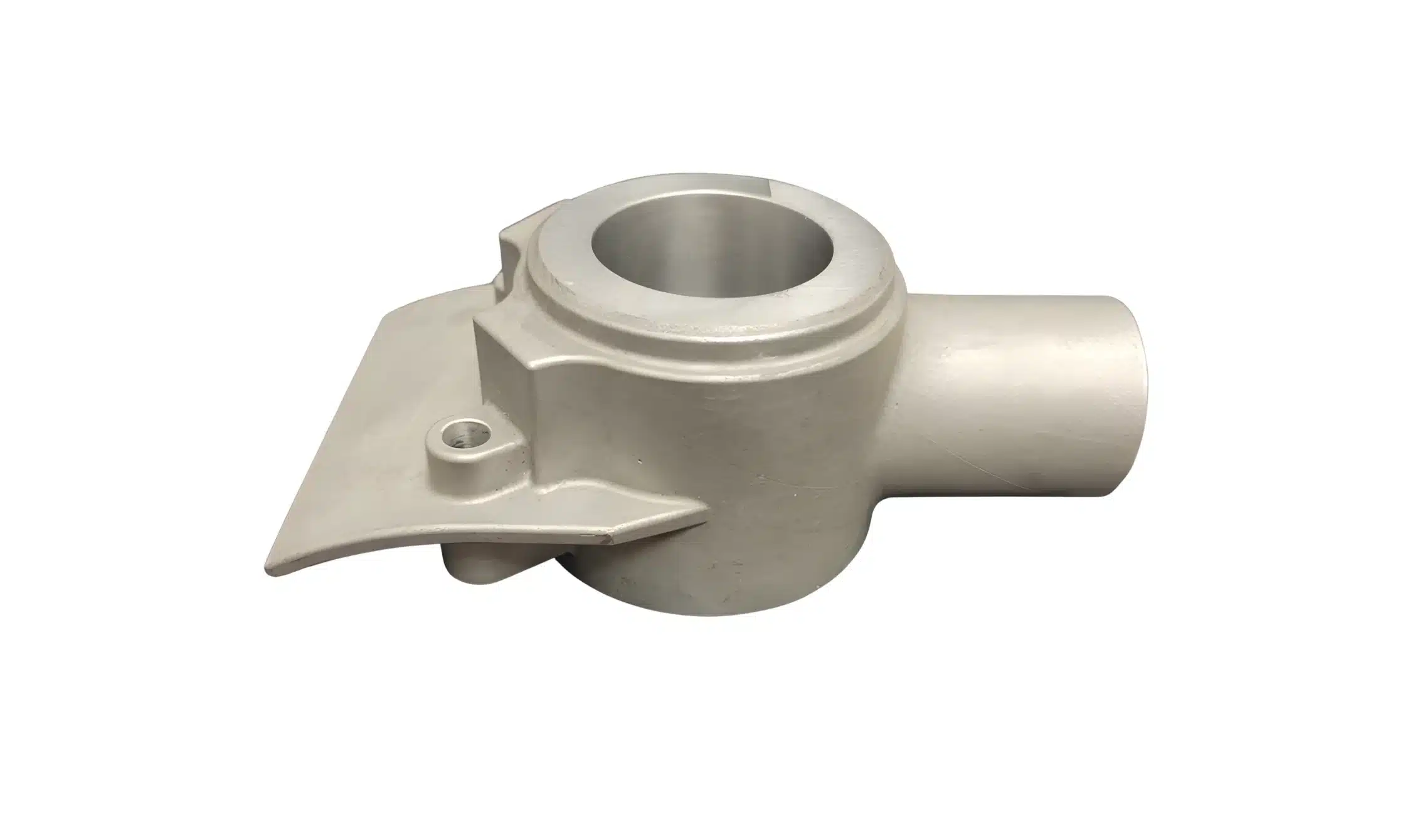
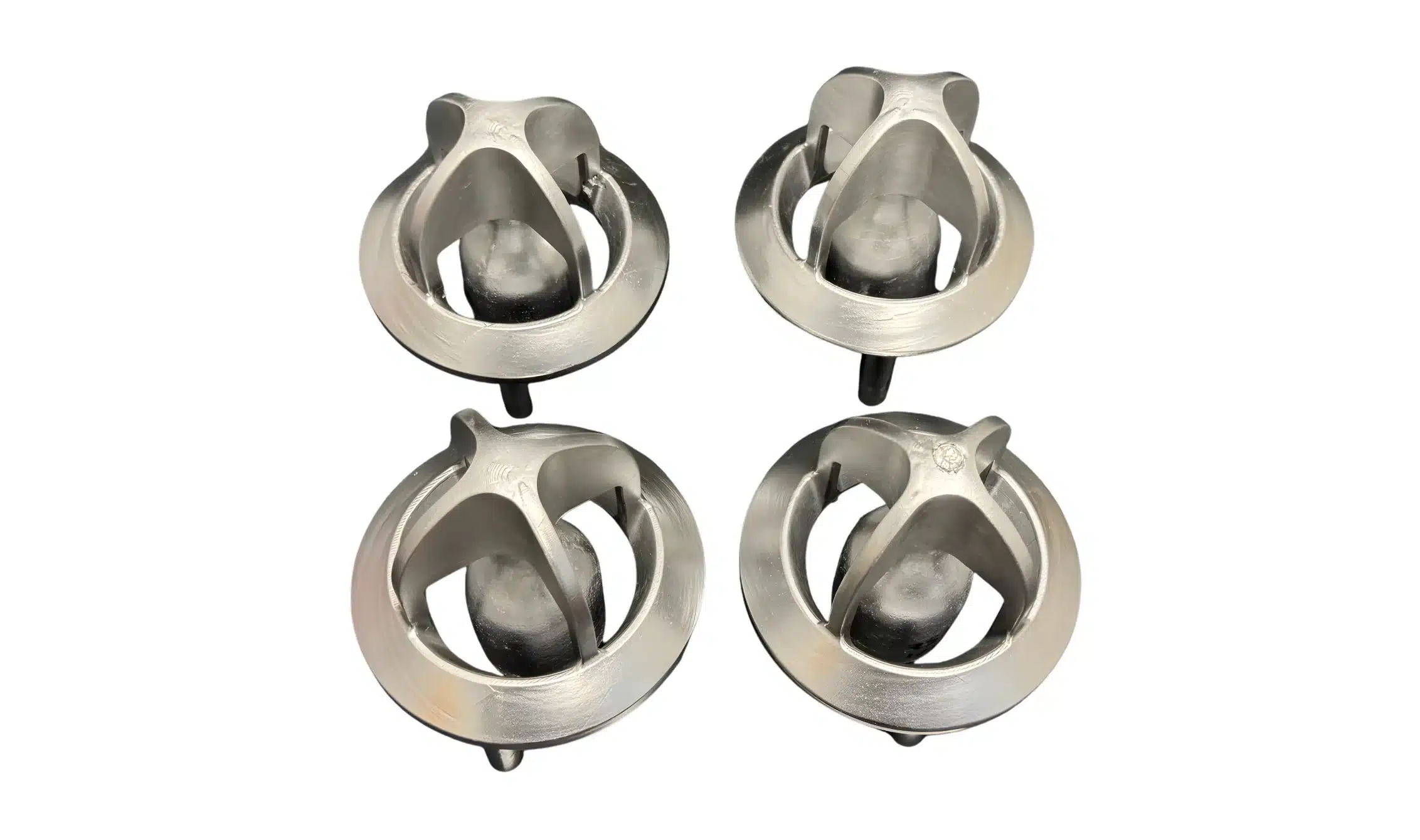
Our ceramic 3D printing technology produces critical components for renewable energy systems — including wind turbine housings, solar tracking parts, hydroelectric turbine components, and gas turbine hot-section parts. Precision-cast internal cooling passages play a crucial role in maximizing turbine efficiency and enabling safe operation at extreme temperatures that traditional casting cannot achieve. Our capabilities span every scale and alloy requirement, including:
- Wind turbine housings, nacelle components, rotor hubs, and generator hardware engineered for high speeds.
- Industrial gas turbine blades and hot gas path components for power plants.
- Hydroelectric turbine runners, hydro storage hardware, and flow control components.
Renewable Energy Applications
Renewable energy components must resist corrosion, high temperatures, and mechanical fatigue — while meeting tight tolerances for maximum efficiency. Our DirectPour™ process delivers solar energy systems hardware, wind power parts, energy storage enclosures, and grid integration components using advanced superalloys, corrosion-resistant stainless steels, and lightweight aluminum alloys. Key applications include:
- Solar tracking mechanism hardware and mounting structures.
- Energy storage system enclosures and control hardware.
- Grid integration and power conditioning components.
From prototype to high-volume production, we support renewable energy manufacturers nationwide.
Energy Applications Gallery
Our Renewable Energy Component Manufacturing Process

Digital Design Optimization and Engineering Analysis
Our engineers analyze your CAD model for thermal cycling, corrosion resistance, and mechanical stress — optimizing component geometry for maximum efficiency and durability. This digital-first approach eliminates costly tooling iterations before a single part is cast. Key analysis steps include:
Every design decision is made to maximize performance and minimize material waste.

LAMP™ Ceramic Shell 3D Printing and Processing
Our patented LAMP™ technology 3D prints ceramic casting shells with integrated cores directly from your design file — eliminating wax patterns, core tooling, and multi-step shell building. Shells achieve >99.5% density with surface finishes under 4 microns RMS. The process includes:
No tooling. No wax. Just precise ceramic shells ready to cast.

Precision Metal Casting and Quality Assurance
We cast renewable energy components in corrosion-resistant stainless steels, high-temperature nickel superalloys, and lightweight aluminum alloys — optimized for high-pressure, high-heat energy environments. Every part undergoes rigorous quality assurance to meet OEM and ASTM requirements. Quality steps include:
Every casting leaves our facility verified, certified, and ready for deployment and long-term maintenance.
Why Choose Rapid Precision Castings for Renewable Energy Components?
Patented Technology No Other Foundry Can Match
Our Digital Foundry™ is built on 26+ patents across six countries — covering the full workflow from ceramic 3D printing to directionally solidified and single-crystal alloy casting. These are proprietary innovations developed and owned exclusively by Rapid Precision Castings. Key differentiators include:
Decade-Long Partnership with GE Energy
Our 10+ year partnership with GE Vernova spans joint development, testing, and qualification of ceramic 3D-printed shells for gas turbine applications. Partnership highlights include:
Complete Digital Foundry™ Capabilities
The only U.S. foundry offering end-to-end ceramic 3D printing and investment casting under one roof — from prototype to full-scale production in Atlanta, Georgia. Our all-in-one advantage includes:
Service Areas Across the United States
From our Atlanta, Georgia Digital Foundry™, we supply precision-cast renewable energy components to manufacturers, OEMs, and project developers across all 50 states. Rapid delivery and dedicated technical support reach every U.S. region. Priority markets include:
Texas — the nation's leading wind and solar generation state.
California — top solar energy producer and offshore wind pioneer.
Iowa — wind supplies over 60% of in-state electricity generation.
Oklahoma — wind accounts for nearly 94% of its renewable energy mix.
Northeast Corridor — fast-growing offshore wind and grid modernization hub.
Get Started with Advanced Renewable Energy Component Manufacturing
Ready to revolutionize your renewable energy component manufacturing with zero tooling investment and 90% faster delivery? Our engineering team is ready to discuss your specific requirements and provide detailed technical proposals.
Contact Rapid Precision Castings today to accelerate your renewable energy component development and production.
Frequently Asked Questions
Renewable energy components include turbine blades and housings for wind power, heat exchanger parts for solar thermal systems, impeller and valve bodies for hydroelectric and geothermal systems, and structural hardware for energy infrastructure. Many of these require precision-cast metal parts for durability and performance.
The five main types of renewable energy are solar, wind, hydroelectric, geothermal, and biomass. Each technology relies on precision-manufactured metal components for critical systems — from turbine castings in wind and hydro to heat-resistant alloys in geothermal and concentrated solar power applications.
Rapid Precision Castings manufactures renewable energy components from its facility in Atlanta, GA, serving the energy sector nationwide. RPC's DirectPour™ process produces precision castings for wind turbine hardware, solar thermal components, hydroelectric impellers, and geothermal valve bodies.
Energy sector castings use alloys selected for specific operating conditions. Stainless steels (316, 17-4 PH) serve corrosive environments. Nickel alloys (Inconel 625, 718) handle high-temperature applications like gas turbine components. Carbon and low-alloy steels serve structural applications. Duplex stainless steels provide strength and corrosion resistance for offshore and marine energy installations.
RPC supports power generation through two pathways: DirectPour™ for manufacturing new replacement components without tooling (ideal when original tooling has been lost or when components are no longer in production), and SLE™ additive repair for restoring worn or damaged turbine blades, vanes, and hot-section hardware to original specifications.
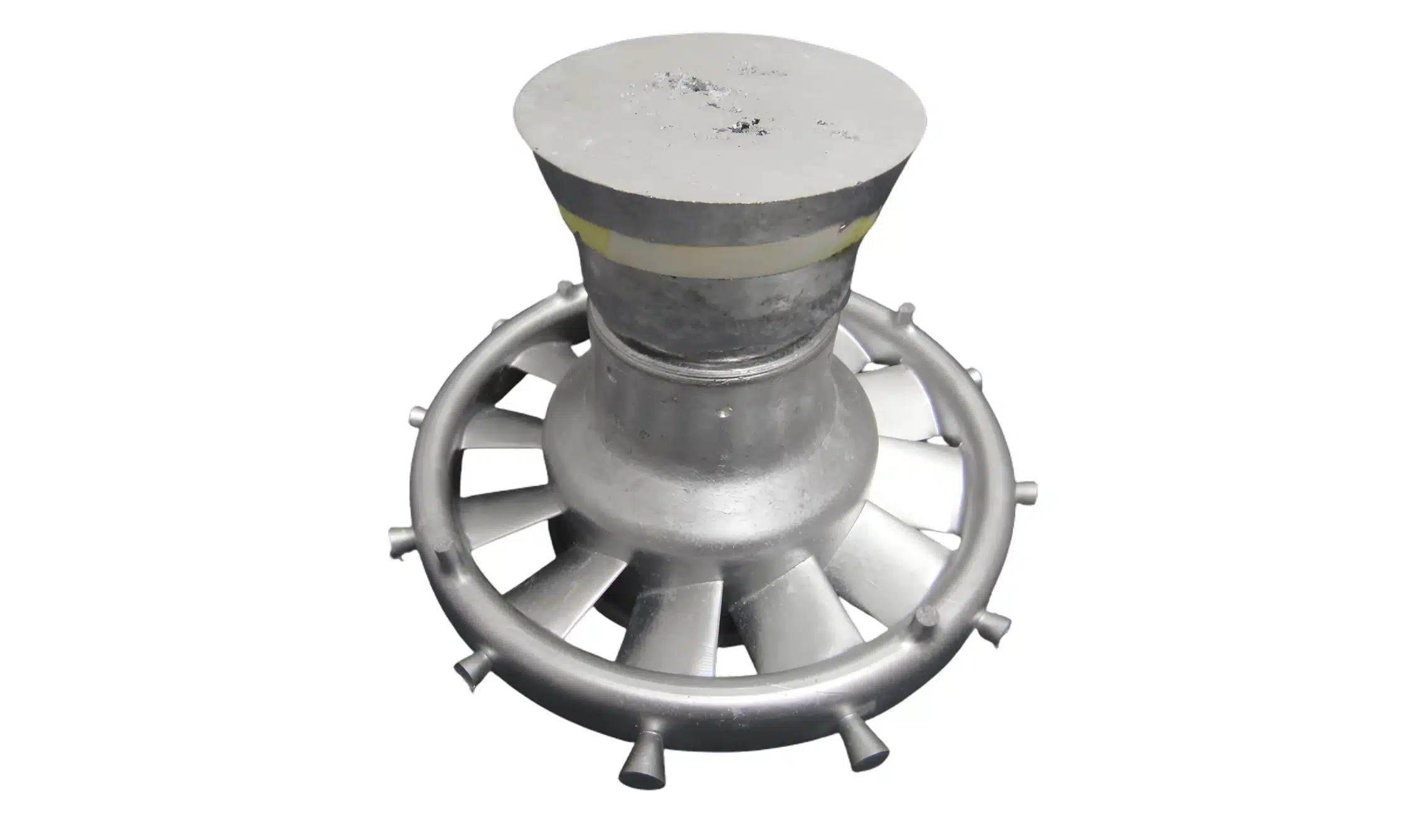
Yes. RPC produces precision-cast impellers, valve bodies, pump housings, and manifolds for energy-sector fluid handling applications. LAMP™ technology is particularly suited for closed impellers with complex internal vane geometries that are difficult or impossible to produce with conventional investment casting tooling.
RPC delivers energy component castings in as little as 10 days for straightforward parts and 4–6 weeks for complex components. This compares to 52–80 weeks for traditional investment casting with tooling. The speed advantage is critical for reducing unplanned outage duration at power generation facilities.
RPC's DirectPour™ process enables energy companies to rapidly prototype new component designs in the actual production alloy and process. Engineers can test multiple design iterations in the time a traditional foundry needs for one — accelerating development of next-generation wind, solar, geothermal, and hydrogen energy technologies.
RPC's alloy portfolio includes materials suitable for hydrogen energy applications, including nickel superalloys and specialty stainless steels that maintain structural integrity in high-temperature hydrogen environments. The ability to rapidly prototype and iterate designs positions RPC to support the emerging hydrogen economy's casting needs.
Energy sector castings are produced to ASTM standards and customer-specific quality requirements. Non-destructive testing options include radiography, fluorescent penetrant inspection, and precision dimensional verification. RPC maintains full material traceability and process documentation for each casting.